


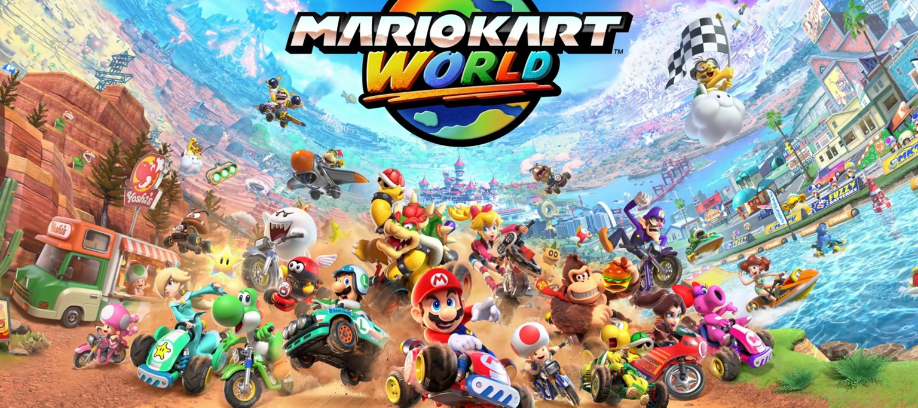
Will £75 Become the Standard for Video Games? What Mario Kart’s Switch 2 Price Tells Us About the Industry’s Future
Nintendo has once again taken center stage in the gaming world with the announcement of the Nintendo Switch 2, a follow-up to one of the best-selling consoles of all time. While the reveal has stirred excitement, the buzz isn’t just about specs or features—it’s the £74.99 price tag of its flagship game, Mario Kart World, that’s sparking debate.
The Console is Competitive, But the Games Raise Eyebrows
The new console itself is competitively priced alongside the PlayStation 5 and Xbox Series X. However, what sets Nintendo’s launch apart is the premium cost of its new game titles—especially Mario Kart World, launching as a companion to the Switch 2.
“It makes it inaccessible, it’s a lot to drop on one game,” said gamer Chloe Crossan in an interview with the BBC, expressing both excitement and concern. “I guess you could argue you’re paying for a game that four people could play… but it is £75 for a game which is a lot.”
While not all titles for the Switch 2 are expected to reach such heights, the premium price attached to one of Nintendo’s biggest franchises signals a shift in its pricing approach.
Dual Pricing Confusion: Physical vs Digital
Another wrinkle in the story is the price discrepancy between physical and digital editions of the same game—a first for Nintendo.
“This could really affect brick-and-mortar retailers,” explained Christopher Dring, editor-in-chief of The Game Business, in a BBC interview. “When a Nintendo Switch game releases, around 80% of its sales are in a box. If you compare that to Xbox, around 80% of new game sales are digital.”
He added, “By charging more for the physical copy it’s going to encourage people to download more, which will be good for Nintendo’s bottom line.” But that move could come at the expense of physical retailers who have long benefited from boxed game sales.
Industry-Wide Price Increases May Be Inevitable
Dring also suggested that Nintendo’s move is unlikely to be an isolated case. “I think if you’re going to see a game that’s going to be able to charge more, look out for when GTA 6 gets a release date later in the year,” he noted.
There’s a broader economic context as well. “These games are taking longer to make, they require more people to make them,” said Dring, who points out that game prices haven’t kept pace with inflation. “I bought N64 games for £50 in the turn of the century and that’s £80 today.”
While studios have offset costs in recent years through in-game microtransactions and the rise of digital distribution, that trend appears to be reaching its limit. “That growth has started to slow, so they’re now relying on price increases,” Dring explained.
Will Consumers Buy In?
Reactions among fans are mixed. Kathryn Brown, another gamer interviewed by the BBC, said her family was still open to buying the new console—even if it felt “more expensive than usual.” She added, “If it gets good reviews, and I wait until people have bought it first, then we’ll think about it.”
Longtime Nintendo fan Lewis Tocher said he’d be picking up the Switch 2 once he could afford it. “Considering the cost of game development nowadays, I’m surprised it hadn’t gone up in price sooner,” he said.
Nintendo’s Price History: A Risky Game
This isn’t Nintendo’s first gamble with pricing—and it hasn’t always paid off. The 2011 launch of the Nintendo 3DS came with a hefty price tag of over £200, double that of its predecessor. Within six months, the company had slashed the price nearly in half due to poor early sales. While the 3DS eventually found its footing, it stands as a cautionary tale.
There are other historical stumbles: the Nintendo 64 launched at £250 in 1997, but was down to £99 within a year. The GameCube also saw a £21 price drop just two weeks before its 2002 launch.
This time, however, Nintendo is betting on nostalgia with a strong lineup of beloved franchises like Mario and Donkey Kong backing the Switch 2.
Final Thoughts
Nintendo is clearly testing new ground—both with its pricing and its release strategy. If successful, this bold move could reshape how consumers perceive value in premium gaming experiences. If not, the company risks repeating its past missteps.
With the global gaming industry closely watching the Switch 2’s launch in June, one thing is certain: the price of playing may never be the same again.


0 Comments