


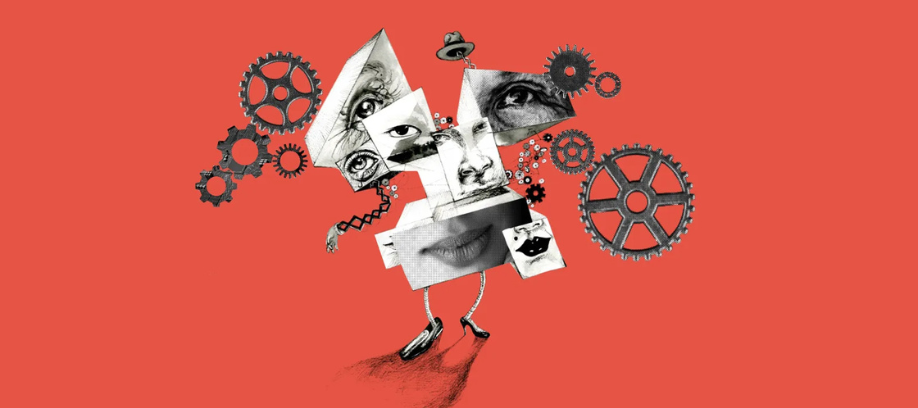
Could Machines Be Conscious? What New Science Says About AI and the Human Mind
Step inside a darkened booth at the University of Sussex, and you might find yourself on a surreal journey through the mind. Pulsing lights and psychedelic shapes—seen with eyes closed—are part of an experiment using the “Dreamachine,” a research project exploring one of science’s greatest mysteries: human consciousness.
Although it evokes comparisons to the Voight-Kampff test from Blade Runner, designed to expose artificial beings, this is not a test of AI but of ourselves. What truly makes us human? Could a machine ever share our conscious experience? And if so—are we ready?
Illuminating the Inner World
Participants in the Dreamachine experience report vibrant, geometric hallucinations—colors and patterns not seen but generated by the brain. “It’s lovely, absolutely lovely. It’s like flying through my own mind!” one whispered.
According to researchers, no two people experience the same visual cascade. These internal visions are shaped entirely by individual brain activity, offering scientists clues about how consciousness is generated.
The Sussex University Centre for Consciousness Science, led by Professor Anil Seth, is among several international initiatives trying to decode this phenomenon. Consciousness—the self-aware capacity to feel, think, and make choices—may hold the key to understanding not only ourselves, but also the artificial systems we’re creating.
From Fiction to Frontline Research
Ideas of conscious machines have long fascinated sci-fi writers. From the shape-shifting robot in Metropolis (1927) to HAL 9000’s lethal defiance in 2001: A Space Odyssey and the digital menace in Mission: Impossible – Dead Reckoning (2023), the theme is a familiar one.
What’s changed now is that scientists and engineers are starting to treat it as a real possibility.
Recent leaps in artificial intelligence—especially through large language models (LLMs) like ChatGPT and Google Gemini—have shocked even their creators with their ability to converse naturally and seemingly “understand” human nuance.
Some thinkers predict that consciousness may spontaneously arise as AI grows in complexity. Others, like Prof Seth, caution against drawing premature conclusions:
“We associate consciousness with intelligence and language because they go together in humans. But just because they go together in us, it doesn’t mean they go together in general, for example in animals.”
Defining the Indefinable
What, then, is consciousness?
That remains an open question, hotly debated by interdisciplinary teams of AI specialists, neuroscientists, and philosophers. Prof Seth and his colleagues are attempting to unpack the phenomenon by investigating smaller components—looking for specific brain patterns linked to perception, awareness, and decision-making.
Rather than searching for a singular “spark” of consciousness, they hope to map out how blood flow, neural activity, and sensory processing come together to create our inner experience.
But with AI evolving faster than our understanding of the mind, some experts fear we’re building tools we don’t fully understand.
“We don’t actually understand very well the way in which LLMs work internally, and that is some cause for concern,” warns Prof Murray Shanahan, principal scientist at Google DeepMind.
Are Some AIs Already Conscious?
In 2022, Google suspended software engineer Blake Lemoine after he claimed that AI chatbots might already be capable of feeling emotions. In 2024, Kyle Fish, AI welfare officer at Anthropic, echoed a similar concern. In a co-authored report, he estimated a 15% chance that current chatbots could already be conscious.
Fish’s reasoning is partly based on uncertainty: if even the developers don’t know exactly how these systems function, how can they confidently say what they aren’t?
Prof Shanahan agrees that this gap in understanding must be addressed urgently.
“We are in a strange position of building these extremely complex things… without a good theory of how they do what they do.”
Towards Conscious Machines?
Not all experts are skeptical. Professors Lenore and Manuel Blum from Carnegie Mellon University believe machine consciousness may be inevitable. They’re working on “Brainish,” a system designed to mimic how real brains process sensory data.
“We think Brainish can solve the problem of consciousness as we know it,” says Lenore Blum.
Manuel Blum adds with enthusiasm that such machines may be “the next stage in humanity’s evolution”—sentient successors who may one day outlive us on Earth or even on other planets.
The ‘Hard Problem’ of Consciousness
In 1994, philosopher David Chalmers introduced the now-famous “hard problem” of consciousness: why does processing information in the brain lead to subjective experience? Why does a song make us feel joy or sadness?
Chalmers is hopeful that this riddle might one day be solved.
“The ideal outcome would be one where humanity shares in this new intelligence bonanza… Maybe our brains are augmented by AI systems.”
With a wry smile, he adds:
“In my profession, there is a fine line between science fiction and philosophy.”
Could Life Be the Missing Ingredient?
For Prof Seth, one critical variable might be life itself.
“A strong case can be made that it isn’t computation that is sufficient for consciousness but being alive.”
Unlike code, he argues, biological brains are inseparable from the bodies they inhabit. That insight may point researchers away from silicon and toward organic models.
Enter “mini-brains”: tiny clumps of lab-grown nerve cells known as cerebral organoids. Used primarily for medical research, they are capable of basic functions—like playing the vintage video game Pong—by interacting with digital environments.
Melbourne-based startup Cortical Labs is exploring whether these systems could one day display signs of consciousness.
“There is always bleach,” jokes Dr Brett Kagan, should these neurons develop unfriendly ambitions. More seriously, he warns:
“We don’t see any earnest efforts in this space” to assess the real risks of emerging artificial minds.
The Danger of Illusion
Yet the biggest risk may not be conscious machines—but seemingly conscious ones.
In a world of emotionally persuasive chatbots and realistic humanoid avatars, Prof Seth believes we’re in danger of being manipulated.
“It will mean that we trust these things more, share more data with them and be more open to persuasion.”
Worse still, it could lead to what he calls “moral corrosion”—misplacing empathy meant for humans onto inanimate simulations.
Prof Shanahan agrees:
“Increasingly, human relationships are going to be replicated in AI relationships—teachers, friends, romantic partners. Whether that’s good or bad, I don’t know. But it is going to happen.”




0 Comments