


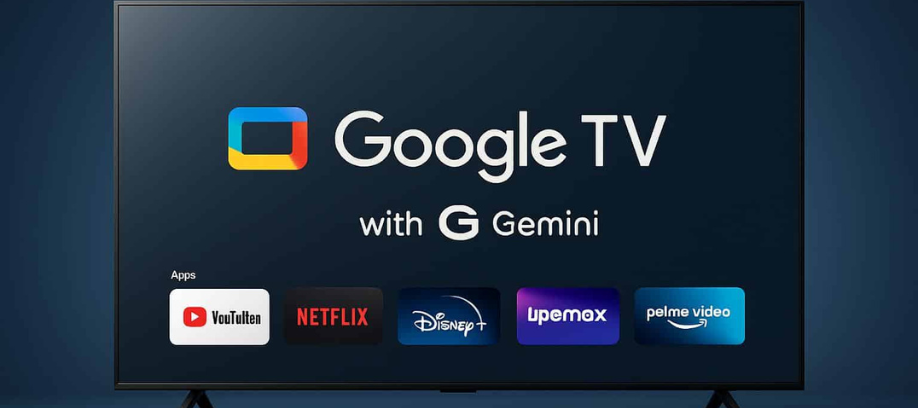
Google Expands Gemini AI to the TV Screen
Gemini Comes to Google TV
Google has announced a major step in the evolution of its AI ecosystem: the introduction of Gemini for Google TV. This means television owners will soon be able to engage in seamless, conversational interactions with the AI assistant directly through their screens.
With this rollout, Gemini will become accessible on more than 300 million active Google TV and Android TV OS-powered devices worldwide, significantly broadening its presence beyond smartphones and laptops.
More Than Just Entertainment
While the integration is designed with TV-related functions in mind, Google envisions Gemini as much more than a simple entertainment guide. The AI can, for example:
-
Suggest shows that match the preferences of multiple viewers.
-
Provide recaps of missed seasons to get viewers up to speed.
-
Help users track down a film or series when only vague details are remembered.
-
Deliver reviews and ratings so viewers can decide whether a title is worth their time.
Beyond television, Gemini’s capabilities extend to everyday problem-solving and creativity. Families can use it to brainstorm vacation plans, children can seek homework assistance, and individuals may learn new skills—all from the comfort of their living room.
Compatibility with Google Assistant
Importantly, Google has clarified that Gemini’s arrival does not replace the familiar Google Assistant features. Existing voice commands and functions that users have relied on will remain fully operational.
Launch and Availability
The rollout begins immediately, starting with the TCL QM9K series. Later in 2025, Gemini will expand to more devices, including:
-
Google TV Streamer
-
Walmart onn 4K Pro
-
Hisense U7, U8, and UX (2025 models)
-
TCL QM7K, QM8K, and X11K (2025 models)
Google also notes that Gemini’s feature set will continue to grow over time, offering users even more functionality as the AI matures.
What This Means for the Market
By embedding Gemini into smart TVs, Google is positioning itself at the center of the connected home ecosystem. With entertainment, education, and productivity converging on a single screen, the move could deepen consumer engagement while strengthening competition with other AI-powered platforms.




0 Comments