


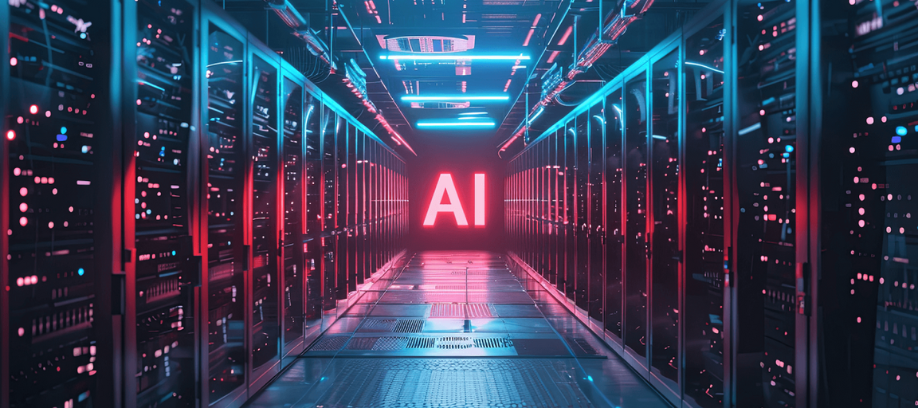
Why AI Data Centres Are Driving a $3 Trillion Investment Boom
Worldwide spending on data centres dedicated to artificial intelligence (AI) is set to reach an eye-watering $3 trillion (£2.2 trillion) between now and 2029, according to investment bank Morgan Stanley. Around half of this sum will fund construction, while the remaining half will go toward the highly expensive hardware powering the AI revolution.
To put this in context, Morgan Stanley notes that this figure is roughly equivalent to the entire French economy in 2024. In the UK, around 100 new data centres are expected to be built in the coming years to meet surging demand for AI computing power. Some of these sites will be developed by Microsoft, which recently announced a $30 billion (£22 billion) investment in the UK’s AI sector.
But what exactly makes AI data centres so different from traditional server farms that store personal photos, social media accounts, and work applications? And are they truly worth this extraordinary expenditure?
The Rise of Hyperscale and AI-Optimized Data Centres
Data centres have been increasing in size for years. The tech industry coined the term “hyperscale” to describe facilities consuming tens of megawatts of power, later scaling into the gigawatt range—a thousand times larger.
AI has accelerated this growth dramatically. Most AI models rely on Nvidia chips, which come in large cabinets costing around $4 million each. These cabinets are central to why AI data centres differ from conventional ones.
Training Large Language Models (LLMs) requires breaking down language into countless minute elements of meaning. This can only be achieved with a network of computers operating in close proximity.
Even a metre of distance between two chips adds a nanosecond (one billionth of a second) to processing time. While seemingly negligible, in a warehouse full of servers these tiny delays accumulate, reducing AI performance. AI cabinets are packed tightly together to minimize latency and enable parallel processing, effectively acting as a single, massive computer. In industry jargon, this is known as density, a critical factor in AI construction.
Power Demands and Energy Management Challenges
High-density AI data centres consume gigawatts of electricity, with LLM training generating massive spikes in energy demand—comparable to thousands of households switching kettles on and off simultaneously.
Daniel Bizo of The Uptime Institute, a data centre engineering consultancy, highlights the difference:
“Normal data centres are a steady hum in the background compared to the demand an AI workload makes on the grid.”
He adds:
“The singular workload at this scale is unheard of. It’s such an extreme engineering challenge, it’s like the Apollo programme.”
To manage these energy surges, companies are exploring innovative solutions. Nvidia CEO Jensen Huang told the BBC that in the UK, he hopes to use more gas turbines off the grid to avoid burdening local infrastructure. AI itself, he adds, will help design better turbines, solar panels, wind turbines, and fusion energy systems to create cost-effective, sustainable power.
Meanwhile, Microsoft is investing billions in energy projects, including a partnership with Constellation Energy to restart nuclear power at Three Mile Island. Google, part of Alphabet, is also pursuing nuclear energy as part of its plan to achieve carbon-free operations by 2030, while Amazon Web Services (AWS) claims to be the world’s largest corporate buyer of renewable energy.
Environmental and Regulatory Considerations
AI data centres also require substantial water resources to cool their processors. In Virginia, USA, where data centres for companies like Amazon and Google are expanding, lawmakers are considering tying new approvals to water consumption limits.
In the UK, a proposed AI facility in northern Lincolnshire has faced objections from Anglian Water, which noted it is not obliged to supply water for non-domestic use and suggested using recycled water from effluent treatment as coolant instead of potable water.
Is This Investment a Bubble?
With such extreme costs and technical challenges, some analysts have questioned whether AI data centre spending is sustainable. At a recent conference, a term was coined—“bragawatts”—to describe the industry’s habit of exaggerating project scale.
Zahl Limbuwala, a data centre specialist at DTCP, acknowledges skepticism:
“The current trajectory is very difficult to believe. There has certainly been a lot of bragging going on. But investment has to deliver a return or the market will correct itself.”
Despite these concerns, Limbuwala believes AI warrants serious investment:
“AI will have more impact than previous technologies, including the internet. So it’s feasible we’ll need all those gigawatts.”
He adds that AI data centres are “the real estate of the tech world.” Unlike speculative tech bubbles like the dotcom boom of the 1990s, these facilities have a tangible bricks-and-mortar base, though the current spending surge cannot last forever.




0 Comments