


Enterprise Customers Still Lead the Way
More than three years after generative AI burst into the mainstream, most artificial intelligence startups continue to generate revenue primarily by selling solutions to businesses rather than individual users. While consumers rapidly embraced general-purpose large language models such as ChatGPT, many niche, consumer-focused GenAI products have yet to gain lasting traction.
This gap highlights a key challenge for founders: widespread curiosity does not always translate into sustainable consumer demand.
Early Excitement, Fast Saturation
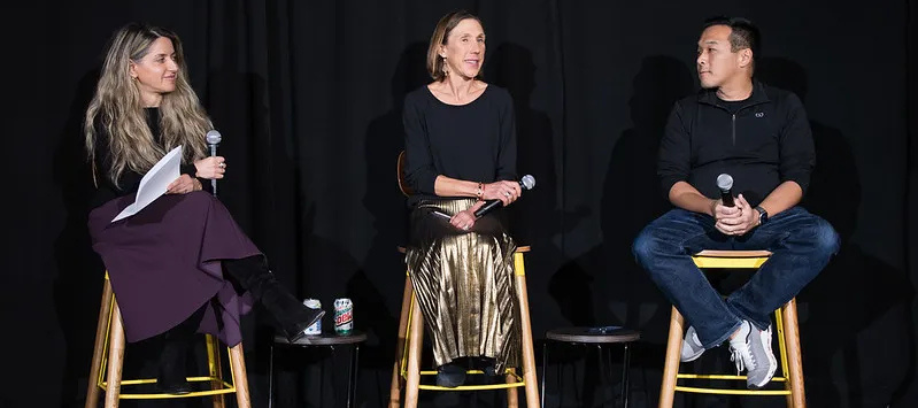
Speaking at TechCrunch’s StrictlyVC event in early December, Chi-Hua Chien, co-founder and managing partner at Goodwater Capital, reflected on how quickly early consumer AI opportunities can disappear.
“A lot of early AI applications around video, audio, and photo were super cool,” Chien said. “But then Sora and Nano Banana came out, and the Chinese open sourced their video models. And so, a lot of those opportunities disappeared.”
Chien likened these early AI apps to the flashlight applications that surged in popularity after the iPhone’s launch in 2008—only to become obsolete once Apple integrated the feature directly into iOS.
Waiting for Platform Stability
According to Chien, consumer AI is still missing a crucial phase of platform maturity. He argued that, just as smartphones needed time to stabilize before transformative apps emerged, AI platforms must go through a similar process.
“I think we’re right on the cusp of the equivalent to mobile of the 2009–2010 era,” Chien said.
That period marked the rise of mobile-first giants such as Uber and Airbnb. Chien suggested that signs of this stabilization may already be appearing, pointing to Google’s Gemini reaching technological parity with ChatGPT.
An “Awkward Teenage Phase” for Consumer AI
Elizabeth Weil, founder and partner at Scribble Ventures, shared a similar view, describing today’s consumer AI landscape as being stuck in an uncomfortable transition phase.
She characterized current consumer AI applications as existing in an “awkward teenage middle ground,” where potential is clear but defining use cases are still forming.
Do We Need a New Device?
One possible catalyst for the next wave of consumer AI growth could be hardware innovation. Chien questioned whether smartphones are capable of unlocking AI’s full potential.
“It’s unlikely that a device that you pick up 500 times a day but only sees 3% to 5% of what you see is going to be what ultimately introduces the use cases that take full advantage of AI’s capabilities,” he said.
Weil agreed, suggesting that smartphones are fundamentally limited because they are not ambient.
“I don’t think we’re going to be building for this in five years,” she said, gesturing to her iPhone.
The Race Beyond the Smartphone
Both startups and established tech companies are experimenting with alternatives to the smartphone. Notable efforts include:
-
A rumored screenless, pocket-sized device being developed by OpenAI in collaboration with former Apple design chief Jony Ive
-
Meta’s Ray-Ban smart glasses, which rely on a wristband that detects subtle hand gestures
-
Various startups attempting AI-powered pins, pendants, and rings—many with underwhelming results so far
While none have yet emerged as a clear successor to the smartphone, the experimentation underscores how open the consumer AI market remains.
Software-First Opportunities Still Exist
Despite the hardware focus, not all successful consumer AI products will depend on new devices. Chien pointed to the potential for a personal AI financial adviser tailored to individual needs. Weil, meanwhile, expects a personalized, “always-on” AI tutor to become commonplace, even if delivered through smartphones.
Skepticism Around AI-Powered Social Networks
Both investors also expressed doubts about several emerging AI-driven social networking startups. Chien raised concerns about platforms where AI bots heavily interact with user-generated content.
“It turns social into a single-player game. I’m not sure that it works,” he said. “The reason that people enjoy social networking is the understanding that there are real humans on the other side.”
Looking Ahead
While enthusiasm for consumer AI remains high, investors suggest that true breakout products may still be ahead. As platforms mature, devices evolve, and use cases become clearer, the next generation of consumer AI startups may finally gain the staying power many have so far lacked.




0 Comments