


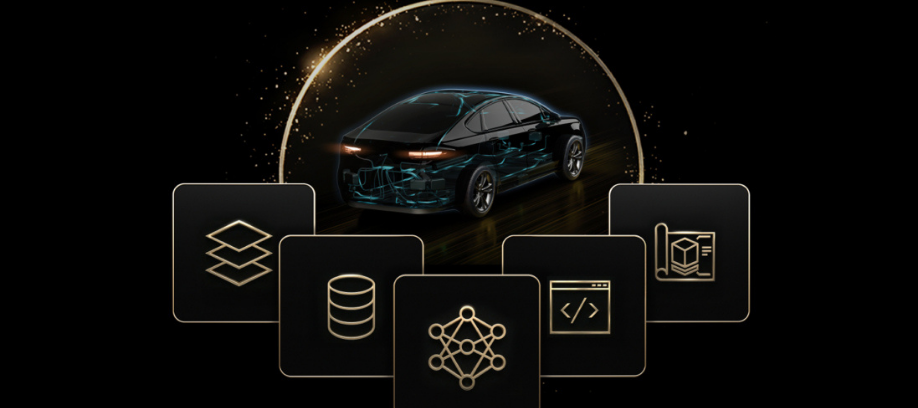
Nvidia Unveils Alpamayo at CES 2026, Brings Human-Like Reasoning to Autonomous Vehicles
At the 2026 Consumer Electronics Show (CES), Nvidia introduced Alpamayo, a new suite of open-source AI models, simulation tools, and datasets designed to advance the capabilities of physical robots and autonomous vehicles (AVs). The initiative aims to enable self-driving systems to reason through complex and rare driving situations with human-like understanding.
“The ChatGPT moment for physical AI is here – when machines begin to understand, reason, and act in the real world,” said Nvidia CEO Jensen Huang. “Alpamayo brings reasoning to autonomous vehicles, allowing them to think through rare scenarios, drive safely in complex environments, and explain their driving decisions.”
Alpamayo 1: Thinking Like a Human on the Road
At the heart of Nvidia’s launch is Alpamayo 1, a 10 billion-parameter vision-language-action (VLA) model that operates on a chain-of-thought reasoning framework. The model enables autonomous vehicles to tackle unusual or complex driving scenarios — such as handling a traffic light outage at a busy intersection — without prior experience.
“It does this by breaking down problems into steps, reasoning through every possibility, and then selecting the safest path,” explained Ali Kani, Nvidia’s vice president of automotive, during a CES press briefing.
Huang also highlighted the system’s transparency during his keynote:
“Not only does [Alpamayo] take sensor input and activate steering wheel, brakes, and acceleration, it also reasons about what action it’s about to take. It tells you what action it’s going to take, the reasons by which it came about that action. And then, of course, the trajectory.”
Open Source Tools for Developers
Nvidia has made Alpamayo 1’s code available on Hugging Face, allowing developers to fine-tune the model into smaller, faster versions suitable for vehicle development or simpler driving systems. It can also be used to create tools such as auto-labeling systems that tag video data, or evaluators that check whether a vehicle’s decisions were safe and logical.
“They can also use Cosmos to generate synthetic data and then train and test their Alpamayo-based AV application on the combination of the real and synthetic dataset,” Kani added. Cosmos is Nvidia’s generative world model, which simulates physical environments so AI systems can predict outcomes and make decisions safely.
Datasets and Simulation Framework
As part of the rollout, Nvidia is releasing an open dataset containing over 1,700 hours of driving footage across varied geographies and conditions. This dataset includes rare and complex real-world scenarios, providing a rich resource for AV training.
Additionally, Nvidia is launching AlpaSim, an open-source simulation framework hosted on GitHub, which recreates realistic driving conditions, including sensor data and traffic patterns. Developers can safely test autonomous systems at scale, reducing risks and accelerating development timelines.
Nvidia’s Alpamayo initiative signals a major step toward more intelligent, human-like autonomous driving systems, combining open-source models, synthetic data, and advanced simulation to tackle edge cases that have long challenged AV technology.




0 Comments