


OpenAI Starts U.S. Ad Trials on Lower-Cost ChatGPT Tiers
OpenAI has confirmed that it has begun testing advertising within ChatGPT for users in the United States who are on its Free and Go subscription plans. The move marks a significant step in the company’s evolving monetization strategy as it looks to balance accessibility with the rising costs of AI development.
The Go plan, launched globally in mid-January, is OpenAI’s most affordable paid option, priced at $8 per month in the U.S. Users on higher-tier subscriptions — including Plus, Pro, Business, Enterprise, and Education — will remain completely ad-free, according to the company.
OpenAI Addresses User Trust and Privacy Concerns
Anticipating concerns around how advertising might affect the ChatGPT experience, OpenAI directly addressed the issue in a recent blog post, stating:
“Ads do not influence the answers ChatGPT gives you, and we keep your conversations with ChatGPT private from advertisers. Our goal is for ads to support broader access to more powerful ChatGPT features while maintaining the trust people place in ChatGPT for important and personal tasks.”
The company emphasized that ads will be clearly labeled as sponsored content and separated from organic responses.
Rival Criticism Spotlighted During the Super Bowl
The advertising test follows an announcement made last month and quickly became the subject of public criticism — most notably from rival AI company Anthropic. During Sunday’s Super Bowl broadcast, Anthropic ran a series of commercials mocking the idea of advertising inside AI chatbots.
The ads portrayed awkward, poorly integrated promotions interrupting chatbot responses, using glassy-eyed actors to dramatize how advertising could disrupt the user experience.
Sam Altman Fires Back
OpenAI CEO Sam Altman responded sharply to the campaign, labeling the commercials “dishonest” and describing Anthropic as an “authoritarian company.” The exchange highlighted growing competitive and philosophical divides within the AI industry as companies race to define sustainable business models.
User Resistance and the Revenue Reality
Consumers have historically been skeptical about the idea of ads embedded in AI responses. OpenAI experienced backlash late last year when it tested app suggestions that some users felt resembled unwanted advertisements.
Despite this resistance, the financial pressure is real. Developing and operating large-scale AI systems is costly, and OpenAI must find reliable revenue streams to support ongoing innovation and business expansion.
How ChatGPT Ads Will Work
According to OpenAI, advertisements will be optimized based on “what’s most helpful to you,” not to influence AI answers. During testing, ads have been matched using factors such as:
-
Conversation topics
-
Past chats
-
Previous ad interactions
For example, users searching for recipes might see ads related to grocery delivery services or meal kit providers.
Importantly, OpenAI states that advertisers will not have access to individual user data, receiving only aggregated performance metrics such as impressions and clicks.
User Controls and Transparency
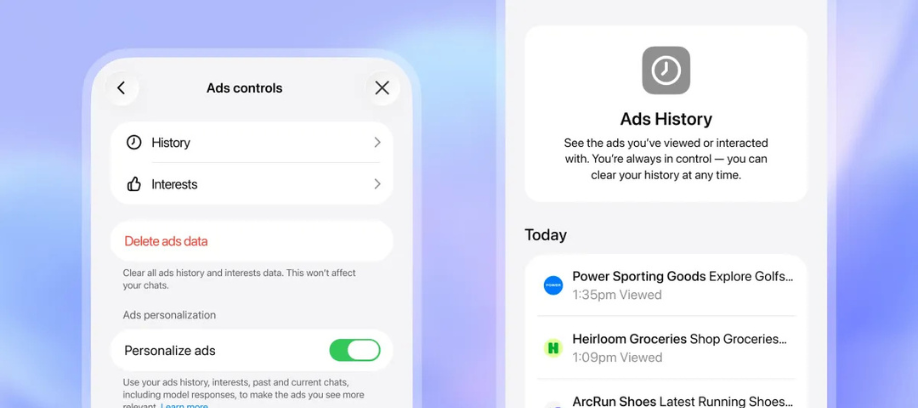
OpenAI is also rolling out several user-facing controls aimed at maintaining transparency and trust. Users will be able to:
-
View and clear their ad interaction history
-
Dismiss ads
-
Provide feedback
-
See why a specific ad was shown
-
Manage ad personalization settings
Strict Safeguards for Sensitive Content
The company confirmed that ads will not be shown to users under 18 and will never appear alongside sensitive or regulated topics, including health, politics, or mental health.
A Defining Moment for AI Monetization
As AI tools move closer to mainstream adoption, OpenAI’s ad experiment may become a bellwether for how the broader industry balances profitability, privacy, and user trust. Whether consumers ultimately accept advertising inside AI platforms remains an open question — one that could shape the future of conversational technology.




0 Comments