


Blue Origin Secures NASA Contract to Deliver VIPER Rover to Lunar South Pole
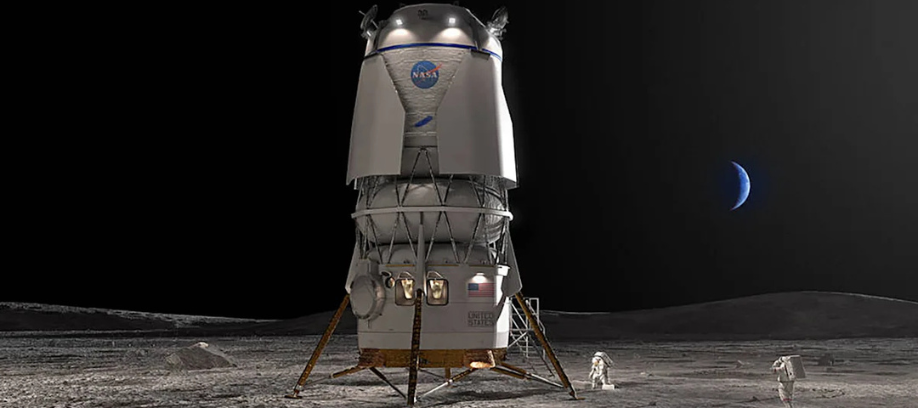
Blue Origin has scored a major victory in its lunar ambitions after winning a NASA contract to deliver the VIPER rover to the moon, signaling renewed confidence in both the Blue Moon lander and the future of human exploration.
VIPER’s Long-Awaited Mission Gets Back on Track
The contract marks a crucial turning point for VIPER — short for Volatiles Investigating Polar Exploration Rover — which had been grounded after NASA paused the program last year due to delays and cost overruns. Under the new deal, Blue Origin will transport VIPER aboard its uncrewed Blue Moon MK1 lander.
While Blue Origin has also received a separate human-rated lander contract under the Artemis program, that project is distinct from the VIPER mission.
NASA’s $190 Million Commercial Lunar Payload Services Award
This new award comes under NASA’s Commercial Lunar Payload Services (CLPS) task order, valued at roughly $190 million. The Blue Moon MK1 lander is set to target a site near the lunar south pole, an area believed to contain significant water ice reserves. VIPER will drill into the lunar surface to verify this hypothesis.
From Cancellation to Revival
VIPER’s path to the moon has been far from smooth. Initially, NASA selected Pittsburgh-based Astrobotic in 2020 to deliver the rover on its Griffin lander, in a deal valued at $199.5 million. However, after both the rover and lander experienced delays, NASA canceled VIPER in July 2024, citing ballooning costs, despite much of the hardware already being built.
The cancellation drew criticism from lawmakers and the scientific community. In response, NASA issued a call for proposals from U.S. companies exploring ways to utilize the existing rover without incurring additional costs for taxpayers.
A Milestone for Blue Origin
For Blue Origin, the VIPER contract represents a significant milestone. The award positions its cargo-focused Blue Moon MK1 lander for its first high-profile scientific mission, with a scheduled launch in late 2027. It also underscores NASA’s growing confidence in Blue Origin, following the company’s earlier Human Landing System contract.
VIPER’s Mission and Scientific Objectives
Roughly the size of a golf cart, VIPER will operate on the lunar surface for about 100 days, moving across the terrain, drilling, and prospecting for water ice deposits. The rover is equipped with several instruments, including a drill and three spectrometers capable of detecting water, hydrogen, and other minerals.
The mission’s results will be pivotal for NASA’s future science goals and for establishing a long-term human presence on the moon. Extracting in-situ resources, rather than transporting them from Earth, will be critical. Water ice could eventually be converted into drinking water, oxygen, and even rocket fuel — a key step toward sustainable lunar exploration.




0 Comments