


From Teen Side Hustle to Million-Dollar Handyman Business: The Chew Brothers’ Journey
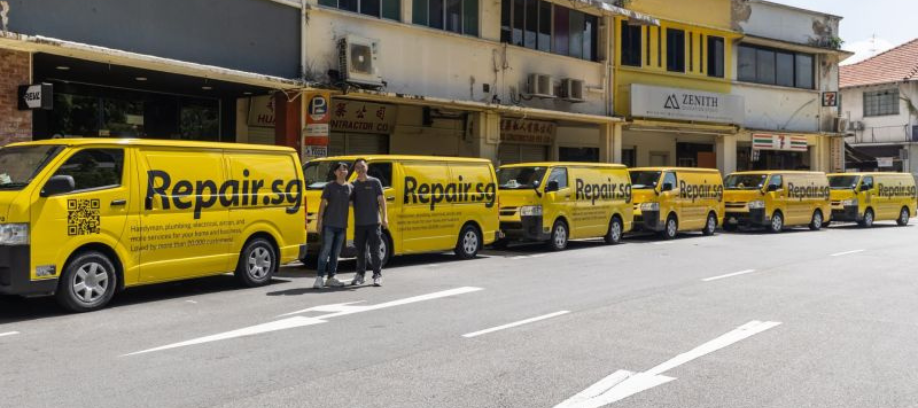
At 16, Zames Chew never imagined that a small website investment would lay the foundation for a thriving business. Today, the 26-year-old, together with his 24-year-old brother and co-founder Amos Chew, runs Repair.sg, a Singapore-based handyman service that has grown into a multi-million-dollar company.
In 2024, Repair.sg generated 1.7 million Singapore dollars (approximately $1.3 million), according to documents reviewed by CNBC Make It. The brothers now employ over 20 people, and projections suggest revenue could reach $2.3 million in 2025.
A Teen’s Spark: Identifying a Market Gap
Growing up, Zames envisioned a career in tech at companies like Google. But in early 2016, he noticed a gap in the market while helping his parents find home repair services.
“Our parents were looking for a service provider to fix something around the house,” Chew recalled. “I was just looking online, and … there [seemed] to be nowhere to find service providers [online] back in the day. So I was like … let me put together a website and see what happens from there.”
At 16, he spent 30 Singapore dollars (about $23) to purchase a website domain. With his father’s help to register the business, Repair.sg was born.
The Early Years: Learning on the Job
Both Chew brothers had always loved hands-on projects.
“My brother and I would do everything together. That means building Legos, building PCs, taking things apart,” said Zames. “[We] have always been building projects together, and it has [been] our dream to … work together when we became adults.”
Initially, Repair.sg was a side hustle squeezed in between school and other responsibilities. The brothers spent years acquiring licenses, skills, and knowledge to legally provide a range of services.
“For the first seven years, up until perhaps even early 2024, [the business] was basically at the brink of death most of the time,” Zames admitted. “We were young and weren’t very good business owners.”
They handled almost every job themselves, from replacing lights to fixing furniture, often responding to customer inquiries at 4 a.m..
“[Maybe] expectations were completely different, or perhaps they were just really cheap and it was a pain for us, or … they were not very nice people,” Chew said. “We just took whatever came our way because we kind of believed the societal belief that we were lower than the rest or not as respected, so we were kind of just grateful for whatever we got.”
Turning a Hobby into a Full-Time Business
It wasn’t until 2021 that the brothers decided to scale Repair.sg into a full-fledged business. They also opted not to attend university, choosing instead to focus entirely on growing the company.
The decision marked a turning point, enabling them to expand services, hire staff, and build a sustainable operation.
Breaking the Blue-Collar Stigma
The Chews are part of a growing trend of Gen Zers entering blue-collar industries, sometimes in place of traditional white-collar careers or higher education.
Despite enjoying their work, the brothers faced skepticism. “Growing up, our parents always [told] us things like: ‘If you don’t study hard, you’re going to end up doing a manual labor job, and it’s going to be awful. Don’t you want to sit in an office with aircon?’” Chew recalled.
Customers also questioned their choice: “’You guys are kids. You guys should be studying in school and not doing this kind of work. This is for people that quote, unquote, don’t make it in life,’” he said.
For a time, societal pressure led them to keep the business a secret. “We were always very insecure about what we did, because while we did enjoy it, the negativity did get to us,” Chew admitted.
Finding Fulfillment in Hands-On Work
Over time, Zames recognized the value of their work and the satisfaction of running a business with his brother.
“I’m happy that I didn’t listen to anyone else and [kept going], because if I were forced to sit in an air-conditioned office five days a week, typing away at a computer, I don’t think I would experience the same amount of happiness, fulfillment, joy that I do running this business with my brother today,” he said.
Chew also noted an encouraging trend: younger people are increasingly exploring blue-collar industries, and some of his friends have even left office jobs for trades, finding greater satisfaction.
“I’m optimistic for the future of the space,” he said.




0 Comments