


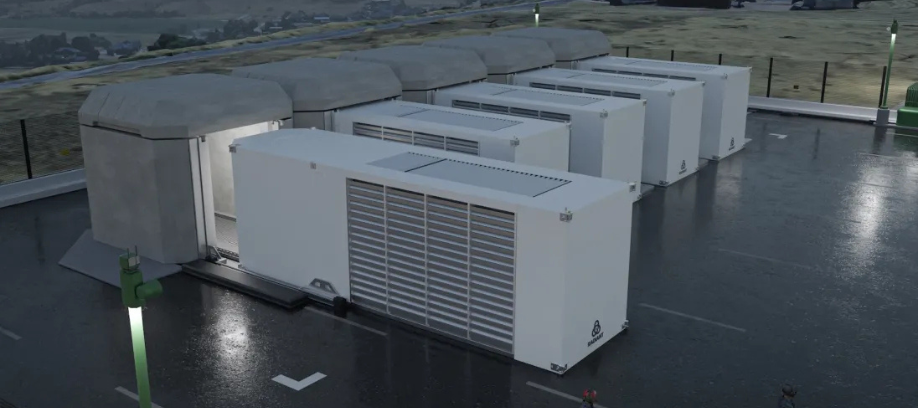
A Surge of Capital Flows Into Nuclear Innovation
Investment momentum in the nuclear energy sector shows no sign of slowing. Radiant Nuclear announced today that it has raised more than $300 million, following closely on the heels of Last Energy’s $100 million raise just one day earlier. The recent funding wave has been substantial across the sector: X-energy secured $700 million three weeks ago, while Aalo Atomics raised $100 million in August. Radiant itself had already raised $165 million just six months ago.
This rapid succession of nine-figure funding rounds has reignited debate about whether nuclear energy startups are entering bubble territory.
Nuclear Power and the Data Centre Boom
The surge in nuclear investment closely mirrors the explosive growth of data centres worldwide. The expansion of artificial intelligence has driven unprecedented demand for electricity, pushing technology companies and infrastructure developers to explore diverse power sources. These range from traditional nuclear fission to unconventional alternatives such as supersonic jet engines.
As long as energy demand from tech firms continues to rise, interest in nuclear solutions is likely to remain strong. However, industry observers note that the next one to two years could prove decisive, particularly if startups fail to meet ambitious timelines—many of which involve bringing their first reactors online as early as next year.
Manufacturing at Scale Remains a Key Test
Some nuclear startups may gain breathing room even after initial deployment. While first-of-a-kind reactors can be constructed manually, many business models depend on mass manufacturing to make nuclear fission cost-competitive. Startups may successfully reach criticality—the point at which a nuclear reaction becomes self-sustaining—but encounter difficulties when attempting to scale production and replicate reactor designs.
This is not to suggest that Radiant Nuclear will necessarily face these challenges. Rather, its announcement comes amid a broader trend of high-profile fundraising across the nuclear startup ecosystem. When investment activity reaches such levels, speculation about a potential bubble is almost inevitable.
Details of Radiant Nuclear’s Latest Funding Round
Radiant’s latest funding round was led by Draper Associates and Boost VC, with participation from Ark Venture Fund, Chevron Technology Ventures, Friends & Family Capital, Founders Fund, and others. The round values the company at more than $1.8 billion.
Earlier backers include Andreessen Horowitz, DCVC, Giant Ventures, and Union Square Ventures, underscoring strong and sustained investor confidence.
A Mobile Microreactor Design
Radiant is developing a 1-megawatt microreactor that can be transported by semi-truck. The reactor will be helium-cooled and use TRISO fuel—carbon- and ceramic-coated graphite and uranium beads designed to offer increased resistance to meltdowns. Each unit will contain enough fuel to operate for five years between refuelling.
The company plans to deploy these reactors as replacements for diesel generators at both commercial and military facilities. Customers will have the option to purchase the units outright or enter into a power-purchase agreement. Once a reactor reaches the end of its 20-year operational lifespan, Radiant will remove and decommission it.
Targeting Data Centres and Strategic Partnerships
Like many nuclear startups, Radiant is positioning data centres among its earliest customers. In August, the company signed an agreement with data centre developer Equinix to supply 20 reactors, marking a significant early commercial milestone.
Demonstration Reactor and Regulatory Acceleration
Radiant’s next major step is the construction of a demonstration reactor at Idaho National Laboratory, with testing targeted for summer 2026. This timeline aligns with a broader industry push established during the Trump administration, which set a goal for three reactors to achieve criticality by July 4, 2026.
Radiant is one of 11 companies selected for this federal programme. While it does not include government grants or loans, it is designed to accelerate regulatory approval timelines, a critical advantage in the highly regulated nuclear sector.
Correction
Correction 1:20 pm ET: Radiant’s reactor will be refuelled once every five years, not months as previously stated.


0 Comments