


AI as “Bicycles for the Mind”
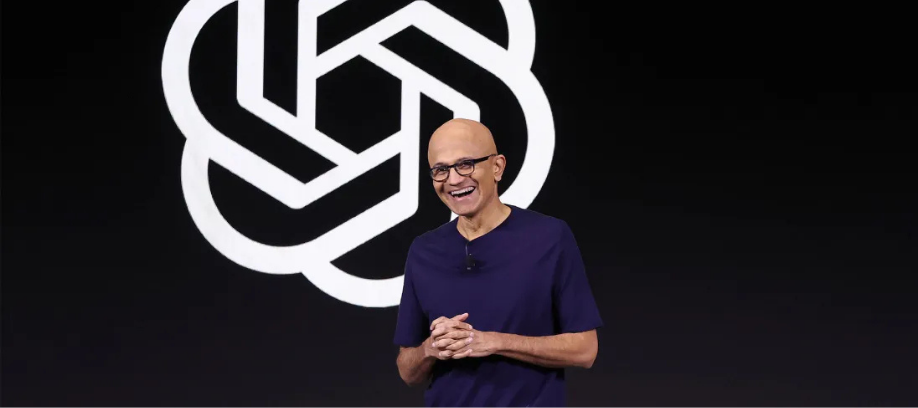
In a post on his personal blog, Nadella encouraged readers to stop seeing AI as “slop” and instead embrace it as “bicycles for the mind.” He explained:
“A new concept that evolves ‘bicycles for the mind’ such that we always think of AI as a scaffolding for human potential vs a substitute.”
He continued:
“We need to get beyond the arguments of slop vs sophistication and develop a new equilibrium in terms of our ‘theory of the mind’ that accounts for humans being equipped with these new cognitive amplifier tools as we relate to each other.”
Nadella’s point is clear: AI should be framed as a tool that enhances human productivity, not as a replacement for people.
The Tension Between AI as Helper and AI as Job Replacer
While Nadella advocates for a human-centric approach, much of AI marketing emphasizes its potential to replace human labor — a key factor in pricing these tools. At the same time, some AI leaders have issued warnings about job disruption. In May, Anthropic CEO Dario Amodei cautioned that AI could eliminate half of entry-level white-collar jobs, potentially raising unemployment to 10–20% over the next five years, a claim he reiterated on 60 Minutes last month.
Yet the reality is more nuanced. Many AI tools today do not replace workers; they are used by humans, provided the AI output is checked for accuracy.
How Much Work Can AI Actually Take Over?
Research from MIT’s Project Iceberg, which studies AI’s economic impact on the workforce, estimates that AI can currently perform about 11.7% of human paid labor. While headlines often interpret this as AI replacing nearly 12% of jobs, the study actually measures the portion of work tasks that can be offloaded to AI, along with associated wages. Examples include automated paperwork for nurses and AI-generated computer code.
Some jobs are seeing more direct effects. Corporate graphic designers and marketing bloggers, as noted in the Substack Blood in the Machine, are facing significant disruption, and new-grad junior coders are experiencing high unemployment rates.
However, highly skilled professionals — artists, writers, programmers — are producing stronger results when using AI tools, demonstrating that human creativity remains irreplaceable.
Job Growth Amid AI Adoption
Interestingly, AI adoption has not uniformly harmed employment. Vanguard’s 2026 economic forecast report found that:
“The approximately 100 occupations most exposed to AI automation are actually outperforming the rest of the labor market in terms of job growth and real wage increases.”
The report emphasizes that workers who master AI tools make themselves more valuable, not replaceable.
Microsoft’s Layoffs and the AI Narrative
Microsoft’s own actions in 2025 added fuel to the AI-is-coming-for-jobs narrative. The company laid off over 15,000 employees, even as it reported record revenue and profits, citing AI as a key business driver. Nadella acknowledged the layoffs in a company memo but framed them as part of a broader effort to:
“Reimagine our mission for a new era,” with “AI transformation” as one of three central business objectives, alongside security and quality.
According to Vanguard, these layoffs were driven more by conventional business decisions — reallocating resources from slower-growing areas to higher-growth ones — rather than internal AI efficiency.
Microsoft was not alone: research by Challenger, Gray & Christmas found that nearly 55,000 U.S. tech workers were laid off in 2025 across companies like Amazon, Salesforce, and Microsoft, partly due to AI adoption.
The Lighter Side of AI: Slop as Entertainment
Finally, for those who enjoy social media memes and AI-generated short-form videos, “slop” might just be one of AI’s most entertaining uses. While Nadella’s message emphasizes productivity and human empowerment, there’s no denying that AI’s quirks provide plenty of amusement along the way.




0 Comments