


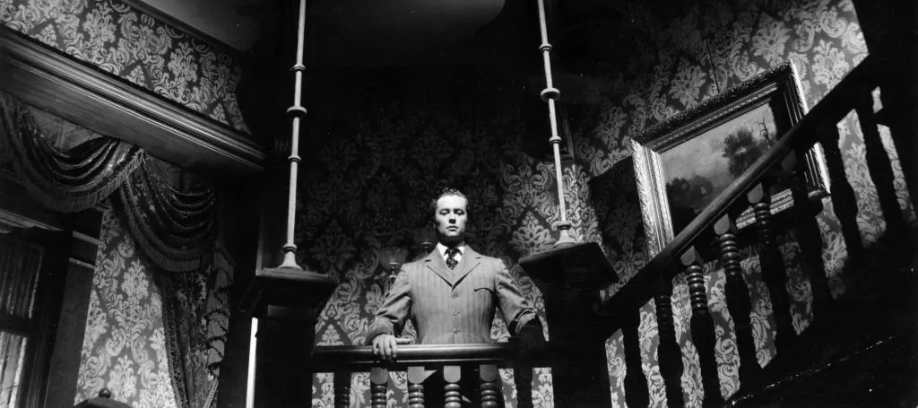
Reconsidering the ‘Magnificent Ambersons’ AI Experiment
When a startup revealed plans last year to reconstruct missing scenes from Orson Welles’ The Magnificent Ambersons using generative artificial intelligence, the announcement was met with confusion and criticism. The idea appeared destined to provoke film purists while offering little obvious commercial upside. At first glance, it felt like an expensive experiment with more cultural risk than reward.
A recent in-depth feature by The New Yorker, written by Michael Schulman, sheds new light on the motivations behind the project — and the people driving it.
A Passion Project Rooted in Film History
The initiative is led by Fable, a startup founded by Edward Saatchi, whose background blends technology, storytelling, and deep cinephilia. Saatchi, the son of one of the founders of advertising giant Saatchi & Saatchi, described growing up immersed in cinema, watching films in a private screening room with his “movie mad” parents. He recalled first seeing The Magnificent Ambersons at the age of twelve.
According to the profile, the project is not driven by nostalgia alone. Ambersons holds a unique place in film history. Although far less commercially celebrated than Citizen Kane, Welles himself once described it as a “much better picture.” That vision, however, was never fully realised.
After a disastrous preview screening, the studio removed 43 minutes of footage, imposed a hastily constructed happy ending, and ultimately destroyed the original scenes to free up storage space in its vaults.
“To me, this is the holy grail of lost cinema,” Saatchi said. “It just seemed intuitively that there would be some way to undo what had happened.”
Building on Earlier Attempts
Saatchi is not the first filmmaker to pursue the dream of restoring Welles’ original intent. Fable is collaborating with filmmaker Brian Rose, who previously spent years attempting to recreate the missing sequences using animation based on the original script, production stills, and Welles’ notes.
Rose admitted that reactions to his earlier work were mixed. After screening the animations privately, he said “a lot of them were scratching their heads.”
Fable’s approach uses significantly more advanced technology. The company films scenes in live action and then overlays them with AI-generated recreations of the original actors’ appearances and voices. In many ways, the effort represents a more polished, better-funded evolution of Rose’s earlier work — an ambitious attempt to glimpse what Welles may have intended.
Technical and Creative Challenges Remain
Despite the sophistication of the tools involved, the project is far from complete. Notably, the New Yorker article does not include footage from Fable’s live-action AI hybrid, only still images and clips from Rose’s animated experiments.
Fable has acknowledged several hurdles, ranging from technical errors — including an AI-generated image depicting a two-headed version of actor Joseph Cotten — to more subtle artistic problems. Saatchi even referenced a “happiness” issue, where the AI system made female characters appear inappropriately cheerful for the tone of the original film.
Reproducing the nuanced cinematography and emotional restraint that defined Welles’ work remains an open challenge.
Rights, Estates, and Industry Skepticism
Whether the reconstructed footage will ever be released publicly is still uncertain. Saatchi conceded that it was “a total mistake” not to consult Orson Welles’ estate before announcing the project. Since then, he has reportedly been working to gain approval from both the estate and Warner Bros., which owns the film’s rights.
Welles’ daughter, Beatrice Welles, told Schulman that while she remains “skeptical,” she now believes “they are going into this project with enormous respect toward my father and this beautiful movie.”
The project has also gained support from actor and biographer Simon Callow, who is currently writing the fourth volume of his Welles biography. Callow agreed to advise Fable and described the effort as a “great idea.” He is also a family friend of the Saatchis.
Not all voices are supportive. Melissa Galt, daughter of actress Anne Baxter — who starred in Ambersons — strongly disagreed with the premise.
“It’s not the truth,” Galt said. “It’s a creation of someone else’s truth. But it’s not the original, and she was a purist.”
AI, Art, and the Limits of Restoration
Even with growing sympathy for Saatchi’s intentions, critics argue that the outcome can never be more than speculative. At best, the reconstructed footage may stand as a novelty — a hypothetical version of what the film might have been.
Galt’s comment that her mother believed “once the movie was done, it was done” echoes a broader philosophical debate around AI and creativity. Writer Aaron Bady explored this tension in a recent essay comparing AI to the vampires in Sinners. He argued that both fail to grasp what truly makes art meaningful.
“There is no work of art without an ending, without the point at which the work ends (even if the world continues),” Bady wrote, adding, “Without death, without loss, and without the space between my body and yours, separating my memories from yours, we cannot make art or desire or feeling.”
Viewed through this lens, Saatchi’s belief that there must be “some way to undo what had happened” feels less visionary and more reflective of Silicon Valley’s discomfort with irreversibility. It mirrors a familiar tech narrative — the idea that even grief, loss, or history itself can be engineered away.
In that sense, the controversy surrounding The Magnificent Ambersons AI project may say as much about modern innovation culture as it does about cinema.




0 Comments