


Can $16 Billion Drive Robotaxis to Profitability?
Waymo’s Rapid Expansion Raises Big Questions
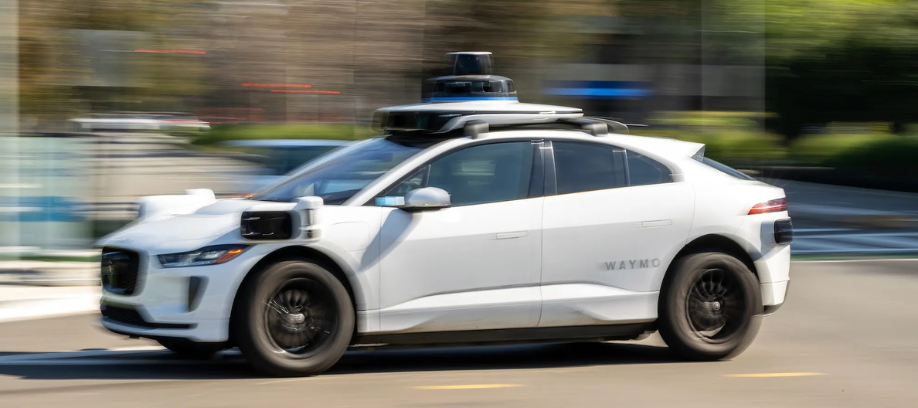
Alphabet-backed autonomous driving company Waymo has gained serious momentum over the past 18 months, emerging as one of the most advanced commercial robotaxi operators in the world. The company currently runs paid, driverless ride-hailing services across six major U.S. markets: the San Francisco Bay Area, Phoenix, Los Angeles, Austin, Atlanta, and Miami.
Waymo’s ambitions stretch far beyond the United States. The company is preparing to expand into more than a dozen international cities, including London and Tokyo, as it accelerates its global rollout. Supporting this growth is a massive $16 billion funding war chest—but the critical question remains: is that enough to build a profitable robotaxi business?
Industry analysts suggest the answer is nuanced. While Waymo is clearly ahead of many competitors, profitability is far from guaranteed.
Alphabet’s Commitment Strengthens Waymo’s Position
One of Waymo’s strongest advantages is the unwavering support of its parent company, Alphabet, which continues to serve as its primary investor. This backing shields Waymo from the funding volatility that has crippled many autonomous vehicle (AV) startups—particularly those that relied on legacy automakers that later scaled back or withdrew investment.
This financial stability has allowed Waymo to scale aggressively while maintaining long-term strategic control over its technology and operations.
Explosive Growth in Ridership and Autonomous Miles
Waymo’s usage metrics highlight just how fast the business is expanding. According to company data, Waymo now delivers 400,000 rides every week across its operating markets. In 2025 alone, the company more than tripled its annual volume to 15 million rides.
These numbers underline strong consumer adoption and growing trust in autonomous ride-hailing. However, growth alone does not ensure financial success—especially in a sector facing high operational costs and regulatory scrutiny.
Profitability Challenges Still Loom
Despite impressive scale, Waymo must still overcome several major hurdles on its path to profitability. Cost efficiency remains a central challenge, particularly as regulators increase their oversight of autonomous vehicle safety.
This scrutiny was underscored recently when Waymo’s chief safety officer testified at a U.S. Senate Commerce Committee hearing, reflecting the heightened attention policymakers are placing on self-driving technologies.
There is also a strategic dilemma. If Waymo chooses to license its autonomous driving technology rather than operate robotaxi fleets directly, it would need to relinquish some operational control—an uncomfortable trade-off for a company managing a still-maturing technology under public and regulatory scrutiny.
Manufacturing: A Key Competitive Gap?
Another frequently cited limitation is Waymo’s lack of in-house vehicle manufacturing. Unlike Tesla, which designs and builds its own vehicles, Waymo relies on automotive partners. While these partnerships are valuable, they do not provide the same level of financial leverage or cost reductions that vertical integration can offer at scale.
This structural difference may become increasingly important as robotaxi operators compete on margins rather than technology alone.
Autonomous Tech Beyond Robotaxis
Autonomous driving is not confined to passenger transport. As robotaxi development proves capital-intensive and complex, many startups are repurposing AV systems for industrial and specialized applications, including defense, trucking, mining, forklifts, and construction.
Investor interest in these alternative use cases is growing, driven by fears of missing out on what many see as the next major wave of “physical AI.”
Bedrock Robotics Signals Investor Confidence in Physical AI
A notable example is Bedrock Robotics, a Silicon Valley startup founded by former Waymo and Segment executives. The company is developing self-driving systems that can be retrofitted onto construction equipment.
Bedrock recently secured $270 million in Series B funding, co-led by CapitalG and the Valor Atreides AI Fund. Additional investors include Xora, 8VC, Eclipse, Emergence Capital, Perry Creek Capital, NVentures (Nvidia’s venture arm), Tishman Speyer, the Massachusetts Institute of Technology, Georgian, Incharge Capital, and C4 Ventures, among others.
Founded in 2024, Bedrock has now raised more than $350 million, highlighting strong capital flows into practical, real-world AI applications. The company has also attracted top talent, including Vincent Gonguet, formerly head of AI safety and alignment at Meta for all Llama models, and John Chu, who joined from Waymo.
Mobility and Automation: This Week’s Notable Deals
Several other funding rounds across the mobility and automation landscape drew attention this week:
-
Additive Drives, a German electric motor manufacturer, raised €25 million ($29.5 million) from Nordic Alpha Partners.
-
Apeiron Labs, an autonomous underwater vehicle startup, closed a $9.5 million Series A, led by Dyne Ventures, RA Capital Management Planetary Health, and S2G Investments.
-
GoCab, an African mobility fintech company, secured $45 million, including $15 million in equity and $30 million in debt.
-
Mitra EV, a Los Angeles-based commercial EV fleet operator, raised $27 million, backed by Ultra Capital and S2G Investments.
-
Overland AI, focused on autonomous systems for military use, raised $100 million, led by 8VC.
-
Plug, a used EV marketplace, secured $20 million in Series A funding, led by Lightspeed.
-
R3 Robotics, which automates EV system disassembly, raised €20 million ($23.6 million) through grants and venture funding.
-
Skyryse, an aviation automation company, raised over $300 million in Series C funding, pushing its valuation to $1.15 billion.
Regulatory Shifts and Industry Developments
In a notable regulatory move, China’s Ministry of Industry and Information Technology announced a ban on concealed electronically actuated door handles—popularized by Tesla. Under the new rules, all new vehicles sold in China must feature mechanical door releases by January 1, 2027. Industry observers suggest Europe may follow suit.
Meanwhile, Uber continues positioning itself for a future shaped by autonomous vehicles. The company promoted Balaji Krishnamurthy to Chief Financial Officer, reinforcing its strategy of investing in AV software partners and infrastructure. During Uber’s Q4 earnings call, Krishnamurthy said the company would invest capital in AV partners, pursue equity stakes or offtake agreements, and “support our AV infrastructure partners.”
Uber also faced a high-profile lawsuit in which a jury awarded $8.5 million to a plaintiff, while rejecting claims of negligence and punitive damages. An Uber spokesperson stated:
“The verdict affirms that Uber acted responsibly and has invested meaningfully in rider safety. We will continue to put safety at the heart of everything we do.”
The company plans to appeal the decision.




0 Comments