


Voice AI Is Still Waiting for Its ChatGPT Breakthrough, Industry Executives Say
The rapid development of artificial intelligence is reshaping how businesses communicate, with voice-powered technology emerging as a potential successor to traditional digital interfaces. Despite significant investment and technological advances, however, industry leaders believe voice AI has yet to experience the transformative breakthrough that brought ChatGPT into the mainstream.
Investors have committed billions of dollars to startups developing voice-based AI solutions, supporting everything from conversational models and automated customer service platforms to intelligent meeting assistants and speech-to-text applications.
As competition intensifies, technology companies are regularly introducing systems designed to replicate natural human speech and conversation. Yet achieving a convincing voice is only one part of the challenge. Experts argue that faster reasoning, accurate speech recognition and user trust will ultimately determine whether voice AI becomes an essential business technology.
Faster AI Reasoning Remains a Major Challenge
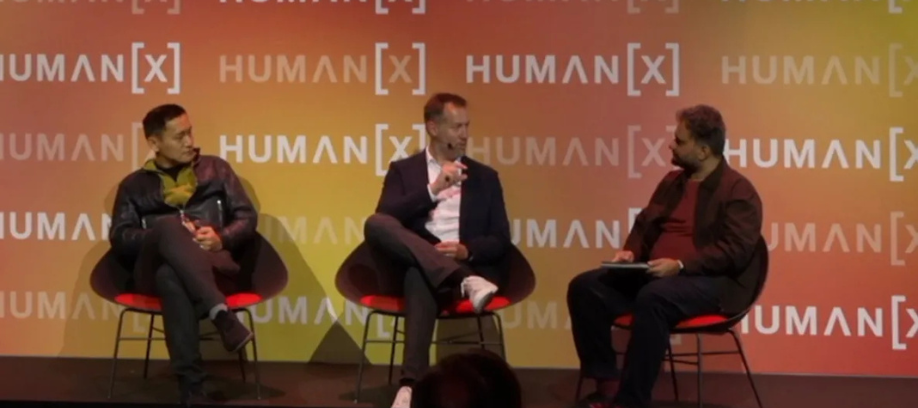
Speaking at the HumanX conference in Amsterdam in September 2026, Shawn Wen, co-founder and Chief Technology Officer of enterprise conversational AI company PolyAI, highlighted the gap between recent technical achievements and genuinely natural interactions.
One important development has been the introduction of full-duplex AI models, which allow systems to listen and respond simultaneously, bringing conversations closer to the way humans communicate.
Nevertheless, Wen believes these improvements are not yet sufficient to deliver the industry’s defining breakthrough.
“We have reached the milestone of developing full-duplex models. The next challenge is to make reasoning very fast, so that the models can fetch answers quickly and the conversation feels natural,” Wen explained during the conference.
The difficulty extends beyond producing realistic speech. AI systems must also interpret questions, retrieve relevant information and respond without disrupting the natural rhythm of a conversation.
For businesses implementing voice technology, particularly in customer-facing operations, these capabilities could determine whether automated interactions improve customer experiences or create additional frustration.
Building Customer Confidence in AI-Powered Conversations
Customer service represents one of the most promising commercial applications of conversational AI, with businesses increasingly exploring automated agents capable of handling enquiries and resolving problems without human intervention.
However, according to Wen, the success of these systems depends heavily on how customers perceive their ability to provide meaningful assistance.
Rather than simply delivering convincing synthetic voices, AI agents need to demonstrate competence during the earliest stages of an interaction.
“I think the next stage will be slightly different because once the voice is good enough, like, and the customer is willing to engage with them for the first two or three turns, they start to build confidence, and over time, they will feel like I probably don’t have to talk to a human if the agent can solve my problem,” he said.
This suggests that the future of automated customer service will depend as much on problem-solving capabilities as on advances in speech generation.
Companies developing voice assistants must therefore prioritise reliability, conversational responsiveness and effective issue resolution if they hope to encourage customers to embrace AI-supported services.
AI Meeting Assistants Move Beyond Transcription
Voice AI innovation is also extending into workplace collaboration, where businesses are adopting intelligent tools to document conversations, identify important information and automate administrative tasks.
Alex Gay, Chief Marketing Officer of Otter.ai, emphasised the importance of combining accurate transcription with a deeper understanding of workplace conversations.
According to Gay, identifying individual speakers, recognising their intentions and connecting discussions with organisational knowledge are essential steps towards creating more sophisticated automated workflows.
Otter is also exploring digital twins capable of representing individuals during meetings, potentially allowing AI-powered avatars to participate in professional discussions.
However, Gay believes these virtual representatives must communicate with the emotional expression and interpersonal awareness associated with real human interaction.
“If you think about the meetings that you’re in right now, the best conversations that you have are where you can have debate, and strategic discussions, and when you feel like there’s a relationship that underpins it. If you aren’t able to have that with an avatar, then it’s just a q and a chatbot,” Gay noted.
The challenge is particularly relevant in corporate environments, where productive meetings often depend on discussion, collaboration, disagreement and the ability to interpret subtle conversational signals.
Without these characteristics, AI-powered meeting representatives risk becoming little more than conventional chatbots with spoken responses.
Speech Recognition Accuracy Remains Critical
Despite continued improvements in conversational technology, speech recognition errors remain a significant obstacle to widespread adoption.
AI assistants can misunderstand spoken instructions, misidentify participants or produce transcripts and meeting summaries that fail to accurately reflect the original discussion.
Wen identified limitations in Automatic Speech Recognition (ASR) technology as a key concern, particularly when systems fail to recognise important keywords that provide essential context.
Such mistakes can influence how an AI model interprets an entire conversation, potentially affecting the accuracy of subsequent responses.
Gay acknowledged similar challenges, explaining that transcription quality remains fundamental to Otter’s wider ambitions in workplace automation.
“For Otter, you know, transcription was never the end point. It was just the layer that we could start to drive some of the productivity gains on the back of. But if your original transcription didn’t have the accuracy that you needed, all the follow-up actions that you have become flawed. And the minute that starts to take action, that is wrong. You lose trust in the platform. It is critical for us to continue to improve that ASR model because all of the downstream impacts are significant,” he said.
The implications for businesses are considerable. An inaccurate meeting transcript could lead to an incorrect summary, an inappropriate follow-up action or a misunderstanding of an important decision.
As organisations increasingly rely on AI to automate tasks based on spoken information, ensuring the accuracy of the underlying data becomes even more important.
Transparency and Trust Shape the Future of Voice AI
Alongside technical limitations, industry leaders are highlighting transparency as another essential requirement for the responsible deployment of conversational AI.
As synthetic voices become increasingly realistic, users may find it more difficult to distinguish between human representatives and automated systems.
This raises important questions about whether customers should be explicitly informed when they are interacting with an AI assistant or when their conversations are being recorded.
Both PolyAI and Otter recognise the importance of establishing clear expectations around the use of these technologies.
For enterprise customer service, Wen believes organisations should make it clear when callers are communicating with an AI-powered agent.
Otter is also examining ways to improve transparency during workplace meetings, including circumstances where its recording technology operates without a visible meeting bot.
One potential approach involves notifying all participants through meeting chat functions when a conversation is being recorded.
These measures reflect a broader challenge facing businesses adopting AI: balancing automation and efficiency with the need to preserve customer confidence, privacy and accountability.
What the Next Voice AI Breakthrough Could Mean for Businesses
Although voice AI has made substantial progress, its future success will depend on overcoming challenges that extend well beyond realistic speech generation.
Faster reasoning, more accurate transcription, emotional intelligence and transparent interactions are all likely to influence how businesses and consumers adopt conversational systems.
For organisations investing in customer service automation, meeting intelligence and workplace productivity tools, the opportunities remain significant. Voice-enabled systems could reduce repetitive administrative work, accelerate access to information and create more convenient ways for customers and employees to interact with technology.
However, widespread acceptance will require AI platforms to demonstrate that they can consistently understand requests, respond appropriately and deliver dependable outcomes.
The defining moment for voice AI may therefore arrive not when machines become indistinguishable from humans in conversation, but when businesses and consumers develop enough confidence in the technology to rely on it as part of everyday communication.
Until then, the industry remains in a period of rapid innovation, substantial investment and ongoing efforts to close the gap between technological capability and practical reliability.
Online References
-
TechCrunch – These execs think voice AI hasn’t reached its ChatGPT moment yet — Original reporting by Ivan Mehta, published 11 October 2026.
-
HumanX – Emotion, Intent and the Future of Voice AI — Official conference session featuring Shawn Wen and Alex Gay.
-
PolyAI – Official Website — Enterprise conversational AI technology and customer engagement solutions.
-
Otter.ai – Official Website — AI-powered meeting transcription and workplace productivity technology.




0 Comments