


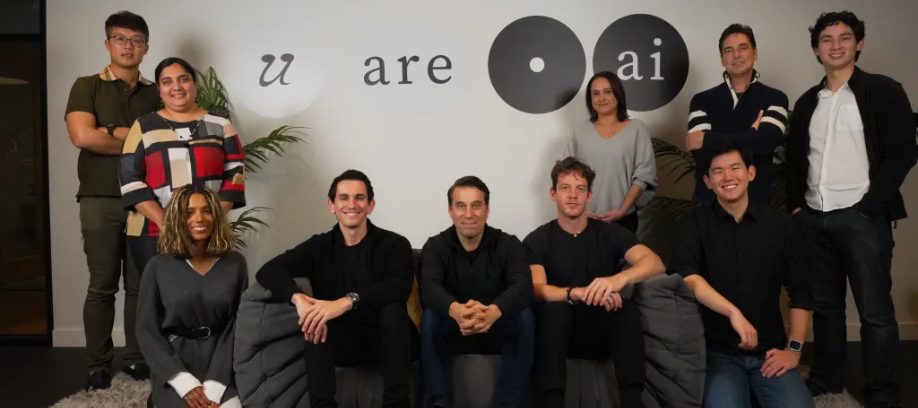
A New Chapter After Three Decades at LivePerson
After nearly thirty years leading LivePerson — the company that revolutionized online communication with web chat technology in 1997 — Robert LoCascio stepped down as CEO in 2023. But instead of retiring, the entrepreneur embarked on an even more ambitious mission: to explore how generative AI can capture and replicate human personality, memory, and voice.
In 2024, LoCascio launched Eternos, a self-funded legacy startup that allowed users to record their stories and voices for future generations. However, the company’s mission soon evolved, along with its name.
From Eternos to Uare.ai: Redefining Personal AI
The transformation of Eternos into Uare.ai marks a significant shift — from creating digital legacies to building personal AI models that represent living individuals and their expertise.
The concept gained widespread attention when Michael Bommer, Eternos’ first client, shared his experience creating a digital replica of himself before passing away. Bommer, who was terminally ill, spent 25 hours speaking with Eternos about his life and beliefs, providing the foundation for his AI twin.
But LoCascio soon noticed something surprising: many users were interested in creating these AIs not to preserve their memory after death, but to enhance their personal and professional lives right now.
The Human Life Model: A Framework for Digital Identity
At the core of Uare.ai’s technology is the Human Life Model (HLM) — a proprietary framework that builds AI personalities using only the individual’s own data. Unlike large language models that rely on massive, generalized datasets, HLM focuses exclusively on the person’s values, experiences, and decision-making patterns.
“I started to realize that the big models, they’re taking our datasets, and they’re getting smarter because of us,” LoCascio told TechCrunch. “We don’t have to take that path. You own the model, and you can share it and monetize it.”
This approach empowers users to control their data and intellectual property while using AI as an extension of themselves — whether to manage projects, create content, or communicate with clients.
Backed by Major Investors
Uare.ai recently announced its rebrand and $10.3 million seed funding round, led by Mayfield and Boldstart Ventures. The funding will help expand the company’s platform and prepare for a public launch later this year.
According to Navin Chaddha, managing partner at Mayfield, Uare.ai stands apart from competitors because of its focus on individual professionals — from consultants to CPAs — and the proven leadership of LoCascio.
Building Your Digital Twin
Once launched, Uare.ai’s platform will enable users to train their own HLMs by answering questions through text, voice, or video. The process starts with storytelling:
“The first part is getting a human life story. Where’d you come from? Tell me a story about your childhood. What’s a crossroad in your life when you were younger?” LoCascio explained.
After collecting personal narratives, users will add factual details such as professional background and achievements. “We blend the facts with this human life story, and that gives us your model,” LoCascio said.
Importantly, these personal AIs won’t rely on external datasets to “fill in the blanks.” As LoCascio notes, “Our AIs will say, I don’t know, if they can’t answer the question.”
The Business Model and the Future of Personal AI
Uare.ai plans to generate revenue through subscription services and revenue sharing for customers who use their digital twins to produce income — such as creators, coaches, and consultants.
The vision is to make Uare.ai a scaling tool for human expertise, allowing individuals to replicate their unique knowledge and personality for professional use.
Meanwhile, the broader market for personal AI is heating up. Delphi, a Sequoia-backed startup, is also developing individual AI replicas, even attracting celebrities like Arnold Schwarzenegger, whose AI lets fans interact with his insights through voice or text.
But according to investors, Uare.ai’s strength lies in its ethics of ownership and individuality — offering a future where people can own their digital identity instead of surrendering it to large AI models.


0 Comments