


Even Realities Reaches $1 Billion Valuation as Smart Glasses Race Accelerates
The smart glasses market is becoming one of the most closely watched areas in consumer technology, as major companies and fast-moving startups compete to bring artificial intelligence, displays, and wearable computing into everyday eyewear. In June 2026, Meta and Snap introduced new smart glasses products, underlining how quickly the sector is developing. Against this backdrop, Shenzhen-based startup Even Realities is emerging as a serious challenger with a privacy-focused approach.
$150 Million Funding Round Pushes Even Realities to Unicorn Status
Even Realities, a three-year-old smart glasses company headquartered in Shenzhen, has raised $150 million in a pre-Series B funding round led by Meituan and existing investor Tencent. The deal valued the startup at $1 billion, giving it unicorn status at a time when investor interest in AI-powered wearable technology is rising.
Founder and CEO Will Wang told TechCrunch that Even Realities is taking a different path from rivals that are focusing on camera-equipped devices designed for content capture and AI assistance. Instead, the company is building display-first smart glasses that show information directly in the user’s field of view while avoiding some of the privacy concerns linked to wearable cameras.
The company’s earlier investors include several major China-based names, among them HSG, formerly known as Sequoia China.
Built by Former Apple Engineers
Even Realities was founded in 2023 by a team that includes former Apple engineers. Wang previously worked on the Apple Watch and iPhone, while other co-founders came from wider technology backgrounds. Two of the company’s co-founders also have experience in luxury eyewear, including at Lindberg.
The startup moved quickly after launch. In 2024, it introduced its first product, the Even G1, which Wang described as the lightest waveguide smart glasses available on the market at that time.
According to the company CEO, Even Realities exceeded its original 10,000-unit target and became the first company in its category to sell more than 10,000 pairs. The company also expanded rapidly, growing from 30-40 employees in 2024 to 300-400 today.
Even G2 Focuses on Display, Not Cameras
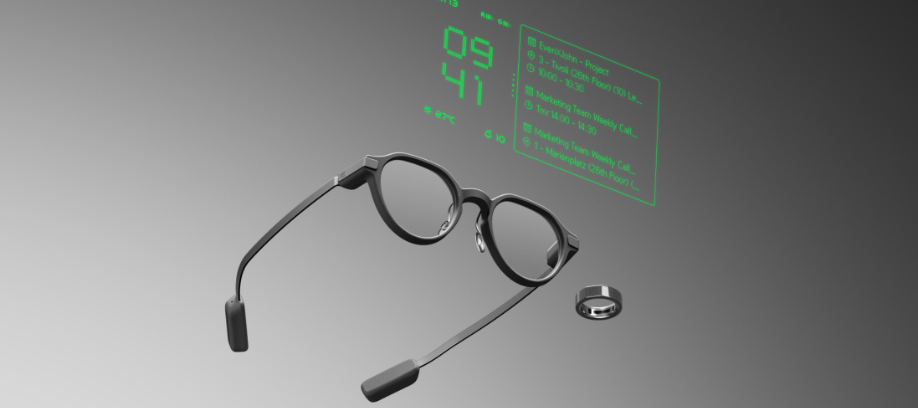
Even Realities’ latest flagship product, the Even G2, launched last November. Unlike many smart glasses products entering the market, the G2 does not include a camera. Instead, it uses a heads-up display built into the frame to show information to the wearer. Users control the glasses through a companion device called the Even R1, a smart ring that supports tapping and swiping gestures.
The company says the Even G2 is designed around privacy, with its official product information confirming that the device relies on an integrated microphone rather than a camera. Even Realities also presents the R1 ring as a discreet control system for the glasses and smartphone.
For Wang, removing the camera is central to the company’s philosophy, but it is not the only privacy measure. He said smart glasses may become the most personal computing device people wear because they sit on the face throughout the day. As a result, the product must feel acceptable not only to the wearer but also to people nearby.
According to Wang, voice-based features such as translation convert audio into text instead of storing recordings. He added that user data is encrypted and that the company’s infrastructure is being developed to meet Europe’s strict privacy standards.
Conversate Targets Professional Users
One of Even Realities’ most-used features is Conversate, a copilot-style tool that follows conversations in real time. It can explain unfamiliar terms, suggest follow-up points, and later sync a conversation summary to the user’s phone.
The company’s product materials describe Even G2 as offering features such as real-time translation, teleprompter support, health monitoring, and AI prompts, while third-party coverage has also highlighted Conversate as one of the device’s key professional-use features.
Optics Remain the Core Investment
Even Realities has invested heavily in the optical system behind its glasses. Wang said the display technology is what makes smart glasses fundamentally different from phones, watches, and other consumer devices.
“With a phone or a watch, the display is just a conventional OLED or LCD screen. Smart glasses are the first product category to rely on optical displays, which require an entirely different technology stack; you have to design the microchip, the optics, and the waveguide together. That’s where we’ve invested the most,” Wang said.
The company has developed its own optical system called Even HAO, short for Holistic Adaptive Optics. Even Realities describes the technology as a proprietary system that combines projectors, waveguides, and lenses to deliver clear information in the display while maintaining natural peripheral and passthrough vision.
U.S. Leads Demand as China Launch Waits
Although Even Realities manufactures its products in China through several factories, it has not yet started selling in the Chinese market. Instead, its main markets currently include the U.S., Japan, South Korea, the Middle East, and Europe.
More than half of Even Realities’ users are based in the U.S., which is also the company’s fastest-growing market and home to much of its developer community.
“The demand there is significant, so we want to make sure we’re prepared first,” Wang said.
Premium Pricing and Executive Customers
Even Realities sells its products near the higher end of the smart glasses market while continuing to generate strong sales volume. Wang said the company is already profitable in the sector.
“Most of our customers are male professionals between 30 and 50 years old. We ran a survey and found that about a third of our users are company executives,” he added.
The Even G2 frames retail for $599 before tax. Prescription lenses or the Even R1 ring can add another $200-$300, bringing the average order value to roughly $1,000.
A Privacy-First Challenger in a Growing Wearables Market
The wider intelligent eyewear market is expanding quickly. Counterpoint Research reported that global intelligent eyewear shipments rose 83% year-on-year in Q1 2026, driven by demand for AR and smart glasses products.
As larger technology companies compete to make camera-equipped AI glasses mainstream, Even Realities is positioning itself differently. By focusing on display technology, professional productivity, and privacy, the startup is attempting to build a category of smart glasses that feels useful without feeling intrusive.
With $150 million in new capital, a $1 billion valuation, and growing demand in the U.S. and other international markets, Even Realities is now one of the most closely watched companies in the wearable AI race.
Online References
TechCrunch reported the company’s $150 million pre-Series B round, $1 billion valuation, and comments from CEO Will Wang.
Even Realities’ official product pages provide details about the Even G2, Even R1, camera-free design, smart ring control, and Even HAO optical technology.
Counterpoint Research reported that the global intelligent eyewear market grew 83% year-on-year in Q1 2026.




0 Comments