


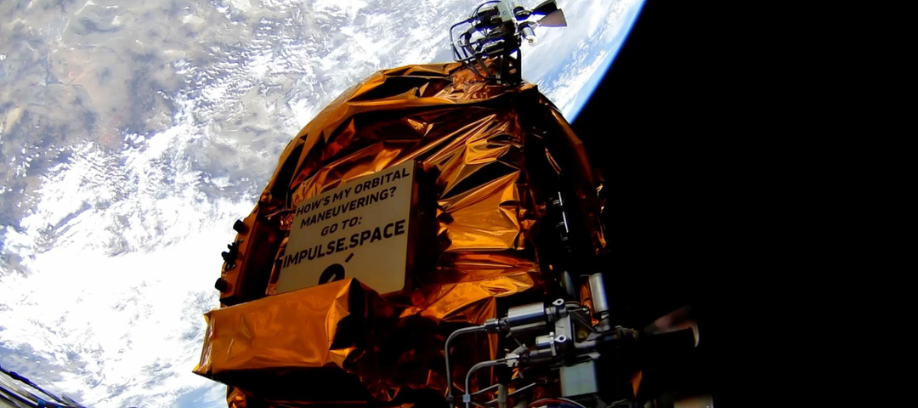
Betting on Brains, Not Bots: How Impulse Space Is Deploying $500M to Build the Human Edge in Aerospace
The in-space mobility startup founded by a SpaceX pioneer is making a pointed statement — that rocket science still needs rocket scientists.
A landmark raise with a clear message
At a moment when headlines are dominated by AI replacing human workers, one space startup is deliberately swimming against the current. Impulse Space — the in-space mobility company launched by Tom Mueller, the engine engineer widely credited with powering SpaceX’s early rockets — has closed a $500 million Series D funding round. The capital will be put to work hiring up to 200 skilled employees, not deploying automation tools.
The round was led by 137 Ventures and BANNER VC, with further backing from Founders Fund, Lux Capital, and Linse Capital. The investor roster reflects the surging appetite for space and defence technology companies, driven in part by increased U.S. government spending on national security infrastructure and the long-anticipated IPO preparations underway at SpaceX.
What Impulse Space actually builds
Impulse Space occupies a specific and strategic niche: the challenge of moving things around once they are already in orbit. The company has developed a highly manoeuvrable spacecraft platform called Mira, designed specifically for U.S. Space Force mission requirements. Alongside Mira, the company is developing Helios, a vehicle engineered to ferry satellites quickly from low Earth orbit — where launch vehicles typically deposit payloads — up to much higher operational orbits.
This focus on in-space mobility positions Impulse as a critical enabler of satellite deployment at scale, particularly as both commercial and governmental demand for satellite infrastructure continues to accelerate.
Why humans still outperform AI in the lab
Company President and COO Eric Romo has been direct about the limits of artificial intelligence when applied to complex hardware engineering. While Impulse’s software teams do make use of AI coding assistants, Romo draws a firm line between writing code and solving physical engineering problems.
“I considered it success if I got within 20% of the right answer, because the simulations were just not that good. They’ve improved, but they’ve not improved that much, and so there’s not really any substitute for designing the thing, analyzing the thing, building it, and then getting it on the test stand.”
— Eric Romo, President & COO, Impulse Space
Romo’s perspective carries weight. As one of SpaceX’s earliest employees — he joined as the 13th hire in 2003 — his early work involved building computer simulations of engine designs to evaluate performance. That first-hand experience shapes his scepticism about how soon AI will genuinely transform physical product development.
He further explains that the data problem is fundamental: unlike large language models, which can draw on vast amounts of publicly available text and code, AI tools for hardware design struggle to find sufficient high-quality training data. As Romo puts it, “If you want to go, say, find the best designs for a turbo pump seal package in the world, you’re not going to find those online.” The engineering know-how that matters most in aerospace has never been published — it lives in the hands and minds of experienced engineers.
Expanding the talent map beyond Los Angeles
The aerospace talent landscape has shifted considerably. Engineers once faced a simple choice — move to Los Angeles or stay out of the industry. Today, thriving hubs have emerged in Seattle, Denver, and Texas. Impulse has responded by recently opening an office in Colorado, deliberately positioning itself where a growing cohort of skilled engineers now chooses to live and work.
The company’s evolution mirrors this broadening scope. What began as a propulsion-focused venture has grown to encompass the full complexity of spacecraft development, requiring not only engine specialists but also experts in vehicle structures and onboard flight computers.
What comes next: Mira’s fourth mission
Mira completed its third flight late last year, though not without complications. A navigation system anomaly caused the spacecraft to consume a significant portion of its propellant earlier in the mission than planned. The engineering lessons from that flight are now being applied. Romo has confirmed that a new Mira mission is in preparation and is expected to launch before the close of 2026.
For a company that is simultaneously hiring aggressively, expanding geographically, and preparing its next spaceflight, the $500 million raise looks less like an exit runway and more like a launchpad — in every sense of the word.
- TechCrunch — Original reporting on Impulse Space Series D
- Impulse Space — Company overview and mission portfolio
- 137 Ventures — Lead investor profile
- Founders Fund — Portfolio and investment thesis
- U.S. Space Force — Space Force procurement and mission context


0 Comments