


Near Space Labs Raises $20M to Revolutionize High-Resolution Aerial Imaging
Innovative Approach to Aerial Imagery
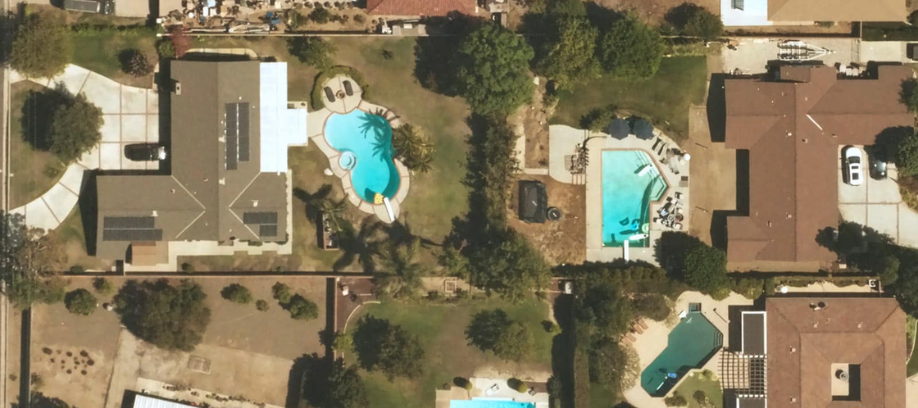
When most people think about capturing high-resolution images of Earth from above, satellites, drones, planes, and spacecraft likely come to mind. However, Near Space Labs, a forward-thinking startup, is charting a different path with its unique approach to aerial photography.
Near Space Labs is developing aircraft known as “Swift,” which are lifted by helium balloons and utilize natural air currents to stay aloft, maneuver around, and capture photos from the stratosphere. These unmanned vehicles eventually glide back to Earth, offering an innovative and efficient method for obtaining high-resolution imagery. Building on the momentum of significant customer demand, Near Space Labs has successfully raised $20 million to further scale its operations.
Backing and Funding
The Series B funding round for Near Space Labs is being led by Bold Capital Partners, a venture capital firm founded by Peter Diamandis, renowned for his roles at XPRIZE and Singularity University. Additionally, strategic investor USAA, a leading insurer for military personnel and their families, joins other backers such as Climate Capital, Gaingels, RiverPark Ventures, Crosslink Capital, Third Sphere, and Draper Associates. To date, the company has raised over $40 million, including a $13 million Series A round in 2021.
The Founding Team: A Vision in the Stratosphere
Near Space Labs was founded by Rema Matevosyan (CEO), Ignasi Lluch (CTO), and Albert Caubet (Chief Engineer), each of whom brings a deep background in space and physics technology.
Rema Matevosyan, who hails from Armenia, grew up in a family of physicists, programmers, and amateur astronomers. After studying mathematics in Yerevan, she moved to Moscow for graduate studies at the Skolkovo Institute. It was there that she met Lluch, who had come from Spain to study in what was often referred to as the “MIT of Russia.” Their collaboration eventually led them to apply to the Urban-X accelerator in New York. Matevosyan has since relocated to the U.S. to lead the company, which is a testament to the global journey that brought Near Space Labs to life.
Adapting to Changing Circumstances
While the founders’ journey has been marked by challenges—including the end of the Skolkovo-MIT partnership in 2022 due to U.S. sanctions on Russia—the team has continued to innovate and grow. The Urban-X accelerator, which played a significant role in Near Space’s early development, was shut down by its main backer, BMW, in 2023. Despite these setbacks, Near Space Labs remains strong and continues to thrive.
A Solution for the Insurance Industry
One of Near Space Labs’ key customer segments is the insurance industry. Insurance companies rely on the startup’s high-resolution imagery to assess and monitor the impacts of large-scale disasters, such as wildfires and hurricanes. USAA, a prominent insurer known for serving military families, is one of the company’s major clients.
Currently, Near Space Labs primarily focuses on specific regions of the U.S., but Matevosyan plans to expand the coverage area significantly. Because Swift aircraft are powered by helium balloons and rely solely on wind currents, the company does not require special licenses to operate, making expansion easier. The goal is to provide 7 cm imagery that covers 80% of the U.S. population twice a year—something that would take 800,000 drones weeks or even months to accomplish.
Expanding to Other Markets
While insurance has been the primary use case for Near Space’s technology, the company is also eyeing opportunities in other industries. Agriculture, in particular, represents a promising new market. Matevosyan explained that many farms have attempted to use drones to monitor crop health, but the technology has not proven scalable due to limitations in accuracy. Drones typically take small samples and extrapolate data, which can lead to inaccuracies. In contrast, Near Space’s high-resolution imagery offers a more reliable and cost-effective solution, making it an ideal option for farmers looking to monitor large areas of land.
Potential for Military Use
While military applications seem like a natural extension for Near Space Labs’ technology, the company has not pursued these opportunities as of yet. The Swift aircraft are “dual-use” and could theoretically carry limited payloads, but Matevosyan has made it clear that the company is currently focused on commercial use cases. Given the geopolitical climate, it will be interesting to see whether military applications become a future avenue for the company.
Investor Confidence and the Future of Aerial Imagery
The versatility and low cost of Near Space’s aerial imagery have captured the attention of investors, and they believe the company is poised to make a significant impact across industries.
“The idea of low-cost aerial imagery is valuable for many parties, not just insurance,” said Will Borthwick, principal at Bold Capital Partners. “Even with the rise of AI, which relies on timely and high-quality data, it’s the perfect moment for a solution like this.”
As Near Space Labs continues to innovate and expand, the company’s ability to provide high-resolution imagery from the stratosphere could revolutionize industries such as insurance, agriculture, and beyond, offering an unparalleled perspective of the Earth below.
Conclusion
Near Space Labs has not only demonstrated the power of its Swift aircraft for capturing high-resolution aerial imagery but also shown how innovation and adaptability can lead to success even in challenging circumstances. With significant funding, a growing customer base, and ambitious plans for the future, Near Space is well-positioned to become a leader in the aerial imaging industry.




0 Comments