


Starship’s Next Test Flight Aims to Go Beyond Hardware Challenges
SpaceX is preparing for the next launch of its colossal Starship rocket from South Texas, a mission that represents more than just another test of machinery. After a series of setbacks over recent months, the company has the opportunity to demonstrate progress and restore confidence in its ambitious program.
Learning from Past Mishaps
The previous Starship test flight occurred nearly three months ago and marked a milestone: the first reuse of a Super Heavy booster. However, the mission ended in disappointment when the upper stage — known as Starship or “Ship” — broke apart during reentry, and the booster exploded over the Gulf of Mexico during its landing burn.
Subsequent complications added to the pressure. A few weeks later, the Ship designated for Flight 10 was destroyed on the ground during a static-fire test, demolishing a test stand and necessitating a replacement upper stage for the upcoming flight. The Federal Aviation Administration has now concluded its investigation into Flight 9, clearing the way for the next attempt.
These consecutive losses have heightened the stakes, turning the forthcoming flight into a critical test of SpaceX’s ability to integrate lessons learned and secure a string of victories.
The Build-Fly-Fix-Repeat Approach
SpaceX’s development philosophy — famously described as “build-fly-fix-repeat” — generates a wealth of data from each test. Yet the repeated loss of the upper stage in flight raises questions about when Starship will be fully ready to transport commercial payloads or astronauts for NASA.
Despite these hurdles, the company has achieved notable milestones. Since the first flight in April 2023, SpaceX has made significant strides with the stainless-steel Starship. In May, the company made history by reflighting a booster for the first time, demonstrating that rapid reuse is feasible. Returning the upper stage safely, however, remains a longer-term goal.
Financial Stakes and Expansion
The financial investment in Starship is substantial and increasingly public. In January, SpaceX reported to Texas regulators that it had spent “more than $7.5 billion” on Starbase and the Starship program. More recently, the company indicated plans to invest an additional $1.8 billion to establish Starship launch pads at Kennedy Space Center and Cape Canaveral Space Force Station in Florida.
NASA’s High Hopes
NASA’s plans are closely tied to Starship’s success. SpaceX holds two contracts worth $4 billion to develop the Human Landing System (HLS), designed to return astronauts to the Moon under the Artemis program. The first mission, Artemis III, is slated for mid-2027. To meet that schedule and reassure NASA of Starship’s safety, SpaceX must accomplish a series of complex milestones, including perfecting the reusable heat shield, demonstrating cryogenic propellant transfer in orbit, and eventually landing Starship on the Moon. Each milestone is groundbreaking, but all must be completed for the program to stay on track.
Workforce Focus and Strategic Importance
Bloomberg recently reported that SpaceX has reassigned many engineers from its Falcon 9 program to Starship, emphasizing the company’s focus on resolving the rocket’s challenges.
Starship’s significance extends beyond lunar missions. CEO Elon Musk envisions the rocket eventually taking cargo and humans to Mars, but in the near term, Starship will enable the launch of larger, higher-throughput Starlink satellites to keep pace with growing demand. With Starlink approaching six million global users, accelerating constellation upgrades is critical to generating revenue that supports SpaceX’s multiplanetary ambitions.
Technical Highlights of Starship
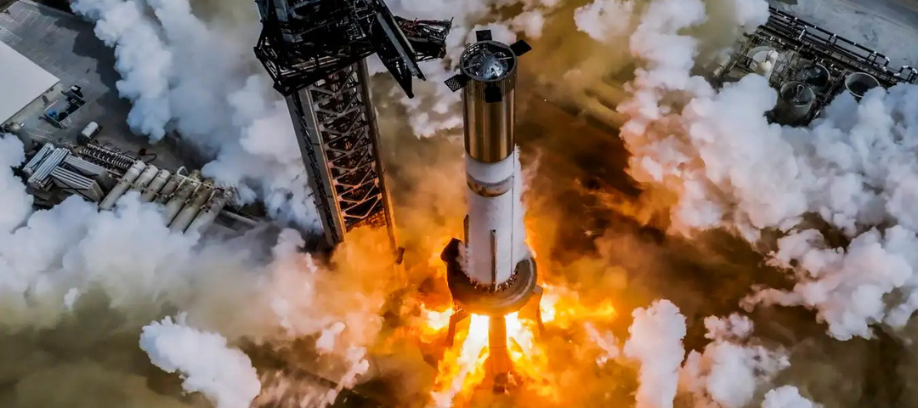
Starship stands as the largest and most powerful rocket ever built, reaching nearly 400 feet in height. Its Super Heavy booster has 33 methane-fueled Raptor engines, while the upper stage carries six, collectively generating about 16.5 million pounds of thrust at liftoff.
For the upcoming flight, SpaceX plans a controlled splashdown of the Super Heavy booster in the Gulf of Mexico and a Ship splashdown in the Indian Ocean. This marks the fourth test flight of the year, scheduled for August 24, with an hour-long launch window opening at 7:30 p.m. ET. SpaceX will livestream the event on X.




0 Comments