


Amazon Positions Alexa+ as a Core Player in the Generative AI Race
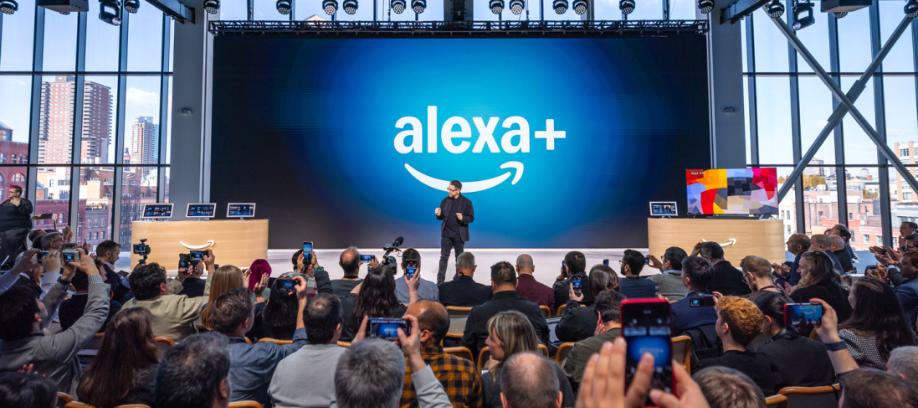
Amazon used the Consumer Electronics Show (CES) in Las Vegas last week to clarify how it plans to compete in the rapidly intensifying generative AI market. Rather than starting from scratch, the company is leaning heavily on two long-standing advantages: the massive presence of its devices inside homes worldwide and the widespread consumer familiarity with the Alexa brand.
According to Amazon, this existing footprint gives Alexa+ a significant head start compared with newer AI platforms entering the market.
Most Amazon Devices Already Ready for Alexa+
Speaking at CES, Amazon Alexa and Echo Vice President Daniel Rausch highlighted just how extensive Alexa’s reach already is.
“Ninety-seven percent of devices we ever shipped can support Alexa+,” Rausch said in an interview during the event.
Amazon’s latest internal data shows the company has sold more than 600 million devices, and Rausch noted that the “vast majority” of them are capable of supporting the upgraded AI assistant, Alexa+.
This compatibility, Amazon believes, dramatically reduces friction when encouraging users to adopt its next-generation AI offering.
Alexa+ and Amazon’s AI Ambitions
First announced early last year, Alexa+ represents Amazon’s long-term strategy in generative AI. The upgraded assistant introduces more expressive voices, access to broad world knowledge comparable to other leading AI assistants, and AI-powered agents capable of completing tasks on a user’s behalf — such as ordering food or calling an Uber.
Amazon has been gradually expanding access to the platform. By last June, more than 1 million Alexa users had gained access, and today, “tens of millions” of customers can opt in to upgrade to Alexa+.
While Amazon has not shared a specific timeline for a full public rollout, the company has confirmed that it is prioritising availability for Prime members before expanding further.
Winning Adoption, Not Just Availability
Beyond technical readiness, Amazon faces a more challenging question: will consumers actually use AI assistants consistently?
Rausch believes Alexa’s established presence gives it a meaningful advantage.
“I think that there’s going to be a whole range of AI out there for customers. I think that Alexa will be one of the foundational assistants,” he said.
While specialist AI tools — such as legal or industry-specific assistants — will continue to exist, Rausch expects a limited number of widely recognised, highly capable AI platforms to emerge. He sees Alexa as one of those core players.
“I think some of the advantages Alexa has is the familiarity of customers, the tens of millions of customers already engaging continuously,” Rausch explained. “It’s in the home, ambiently available, in voice, in the most natural interface. I do believe that that’s our opportunity to grow.”
Rising Competition Across the AI Landscape
Amazon’s push comes amid growing competition from both tech giants and AI-first startups. Apple recently announced plans to integrate Google’s Gemini into Siri, while AI platforms such as ChatGPT and Claude continue expanding across areas including research, healthcare, and software development.
In response, Amazon is extending Alexa beyond smart speakers. Just ahead of CES, the company unveiled browser-based access to Alexa and introduced a redesigned Alexa mobile app that places a chatbot-style interface at its core.
At CES itself, partners including Samsung, BMW, and Oura demonstrated new Alexa-powered integrations, highlighting Amazon’s broader ecosystem approach.
Bee Acquisition Signals Broader AI Strategy
Amazon also used the event to spotlight its recent acquisition of Bee, an AI-powered wearable that records conversations and delivers insights to users. Bee can be accessed through both text and voice interactions.
Looking ahead, Rausch confirmed that Alexa and Bee will become more closely integrated over time. However, he emphasised that Bee will continue to stand on its own.
He described Bee as “an important and lovable experience,” suggesting Amazon sees long-term value in maintaining the wearable as a distinct brand alongside Alexa.




0 Comments