


A Simple, Button-First User Experience
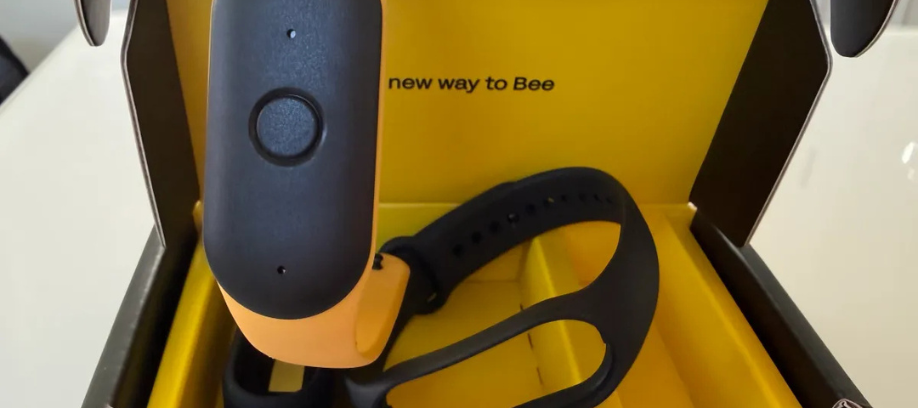
Initial hands-on testing with a review unit of Bee, Amazon’s latest AI wearable, suggests the device has been designed with simplicity in mind. Recording is controlled via a single button press to toggle audio capture on or off. Within the companion mobile app, users can customise actions such as assigning a double press to bookmark a moment in a conversation, process the ongoing discussion, or perform both tasks simultaneously.
The app also allows users to decide whether a press-and-hold gesture is used to leave a voice note or to interact directly with the AI assistant. During testing, Bee’s app actively prompted users to enable voice notes — a reminder that proved useful.
How Bee Handles Conversations Differently
Like a growing list of AI-powered audio tools — including Plaud, Granola, Fathom, Fireflies, and Otter — Bee is capable of listening to, recording, and transcribing spoken conversations. However, Bee sets itself apart by focusing less on full transcripts and more on structured summaries.
Rather than delivering a single block of text, the system divides audio into logical sections and generates summaries for each. For example, an interview might be broken down into an introduction, detailed product discussion, analysis of industry trends, and other thematic segments.
Each segment appears in the app with a distinct background colour, making it easier to navigate long conversations. Users can also tap into any section to view the precise transcription behind the summary.
Limitations Around Speaker Identification and Audio Retention
Speaker identification, however, is an area where Bee currently lags behind more professional transcription tools. While users can tap a conversation segment to confirm whether they were the speaker, the app does not support detailed speaker labels for multiple participants.
Another notable limitation is that Bee deletes the original audio once transcription is complete. This makes it unsuitable for scenarios where users may need to replay recordings to verify accuracy — a common requirement in professional or legal contexts.
Designed as a Personal Companion, Not a Work Tool
Amazon positions Bee less as a productivity device and more as an always-available AI companion. The company envisions it operating alongside users throughout their day rather than serving as a formal workplace recorder.
Through integration with Google’s services, Bee can connect recorded conversations to follow-up actions. For example, after meeting someone at a conference, the device may suggest adding them on LinkedIn or researching their company or product.
Bee also supports standalone voice notes, offering an alternative to typing reminders into a traditional notes app.
Memories, Insights, and Personal Facts
Within the app, users can revisit “memories” organised by day, effectively creating a searchable personal archive. A separate “Grow” section is designed to provide insights over time as the AI learns more about the user.
There is also a “facts” area where users can confirm and add personal details — similar to the memory functions found in many conversational AI platforms that retain context from past interactions.
According to Amazon, additional features for Bee are planned and will be rolled out over the coming year.
Privacy Signals and Recording Etiquette
Unlike some rival wearables — such as the Friend AI pendant, which faced backlash — Bee does not continuously listen by default. Users are expected to request consent before recording private conversations, except in public settings where recording is already common practice.
When recording is active, a green indicator light turns on, clearly signalling to others that the device is in use.
Hardware Design: A Mixed First Impression
From a hardware standpoint, Bee’s sports band raised some concerns during testing. The band detached twice while the wearer was seated and largely stationary, such as during a taxi ride. Although the clip-on pin attachment has not yet been fully tested, it appears more robust at first glance.
A Strong App Experience, but an Open Question
One area where Bee stands out is software design. The mobile app feels significantly more refined than many of Amazon’s previous in-house products, including the Alexa mobile experience. Navigation is intuitive, and the overall interface is clean and user-friendly.
That said, the broader premise remains largely unproven: do consumers truly need an AI dedicated to recording and analysing everyday conversations outside professional environments like meetings and interviews?
Cultural Implications of Always-On AI
If AI listening devices were to gain mainstream adoption, they could also trigger a shift in social norms. While recording video of people in public spaces is often legal, it is still widely viewed as intrusive. Similarly, discreetly recording audio with an AI wearable without clear consent could be seen as inappropriate or even unsettling.
There is also the risk that people may begin to self-censor in public spaces if they assume conversations could be recorded without their knowledge.
A moment at CES highlighted this discomfort. While chatting with a representative at the Soundcore booth, the rep joked, “Say that louder into my microphone,” gesturing toward an already-recording AI device clipped to their shirt. The interaction underscored how easily casual, real-world conversations could become permanently documented.
A Test Case for Consumer Readiness
Ultimately, Bee’s success — or lack of it — will serve as an important signal for Amazon. Consumer adoption will help determine whether people are ready to embrace a future where everyday conversations are captured, analysed, and stored by AI — and whether that is a world they genuinely want to live in.




0 Comments