


New Family Protection Feature Targets Scam Calls
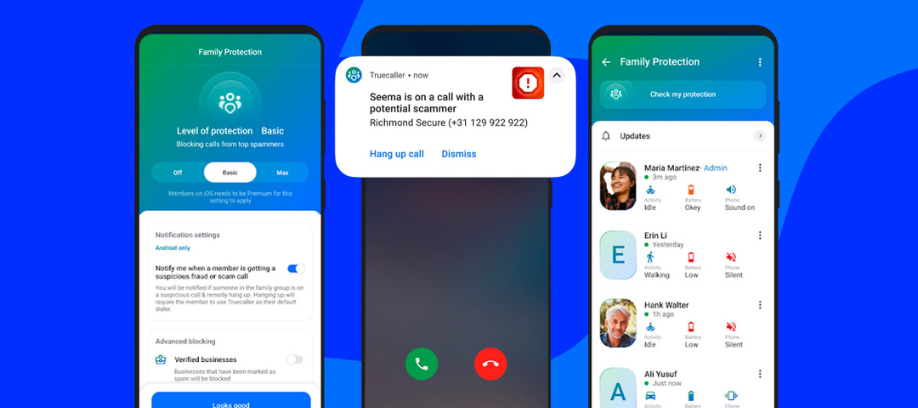
Caller identification platform Truecaller has launched a new feature designed to help families protect each other from fraud. The update allows one user to act as an administrator for a family group, receiving alerts about suspicious calls that other members receive and even ending those calls remotely if they appear to be scams.
The company, which serves more than 450 million users worldwide, initially introduced the feature in December in selected markets including Sweden, Chile, Malaysia, and Kenya. After reporting positive early feedback, the company has now expanded the feature globally, including to India, its largest market.
Importantly, the new feature is free to use, and users can create family groups even without a paid subscription to the platform.
How the Family Admin System Works
The new tool allows a technologically savvy member of a family or friend group to become the admin of a group of up to five members. Once individuals join the group, the administrator receives notifications if other members receive calls that are flagged as potentially fraudulent.
If the admin believes the call could pose a risk, they can remotely terminate the call to prevent the user from engaging with the suspected scammer. However, while fraud alerts work on both iOS and Android, the remote call-ending feature currently works only on Android devices.
Additional Monitoring Tools for Android Users
For Android users, the feature goes even further. Members can allow the group admin to view certain real-time activity signals, including:
-
Whether the user is walking or driving
-
Battery level of the device
-
Phone sound settings, such as whether the phone is on silent mode
According to the company, these signals can help administrators — particularly those assisting elderly family members — determine the best time to call them without interrupting activities such as walking or driving.
The admin also has the ability to block specific phone numbers or international dialing codes and share that blocklist with other members of the group.
At the same time, Truecaller emphasized that the admin cannot access non-spam call history or SMS records, preserving users’ privacy.
Rising Concern Over Fraud Calls
Speaking about the motivation behind the feature, Kunal Dua highlighted how common fraud incidents have become.
“I think, unfortunately, all of us know somebody or another in our families or friends who have been impacted by fraud,” Kunal Dua, Chief Product Officer, at Truecaller, told TechCrunch over a call. “In that sense, it’s a fundamental shift for Truecaller in terms of what we’ve been focusing on as a problem,” he added.
AI-Powered Scam Protection in Development
The company has already begun integrating artificial intelligence into its platform. Last year, it launched an AI-powered voicemail feature in India, where an AI assistant answers calls when users are unavailable and delivers a transcript summary.
Looking ahead, the company is exploring ways to apply similar AI technology to family protection tools, potentially allowing admins to understand the nature of a suspicious call their family member receives.
Another AI-driven idea under exploration is a call screening system that could automatically disconnect calls when certain scam-related phrases are detected. One example cited is “digital arrest,” a tactic used by scammers who impersonate law enforcement officials to pressure victims into sharing sensitive information or sending money.
Surge in Scam Calls in India
India has seen a notable rise in scam calls, leading to significant financial losses across the country. According to Truecaller, it identified more than 7.7 billion fraud calls last year.
Authorities in India have also introduced several initiatives to tackle the issue. One proposal, known as SIM binding, has sparked debate because it could potentially affect the functionality of popular messaging platforms such as WhatsApp and Telegram.
Market Pressures and Competition
Despite its technological advancements, Truecaller is facing business challenges. Over the past year, the company’s stock price has fallen by more than 80%.
In its Q4 2025 earnings report, the company revealed that EBITDA dropped 49% year-on-year, while advertising revenue declined 31%.
The platform is also encountering competition from India’s Caller Name Presentation (CNAP) system, which displays a caller’s name based on telecom carrier records.
However, company leadership argues that simply displaying the caller’s name is not enough to combat spam calls effectively.
During the Q4 2025 earnings call, Rishit Jhunjhunwala addressed the potential impact of the new system.
“In India, there has been much talk about the imminent rollout of CNAP,” Truecaller CEO Rishit Jhunjhunwala said during the Q4 2025 earnings call. “CNAP is partially rolled out, and so far, the impact on our user growth is limited. As we have said in the past, we expect that CNAP might have some impact on user growth, but that remains to be seen as CNAP reaches a full rollout.”
He added:
“Our focus continues to be on delivering a superior product, and as you are aware, the consumer can choose to have CNAP and Truecaller in parallel, where we provide a lot more information and a lot more context and various other solutions, for the consumer.”




0 Comments