


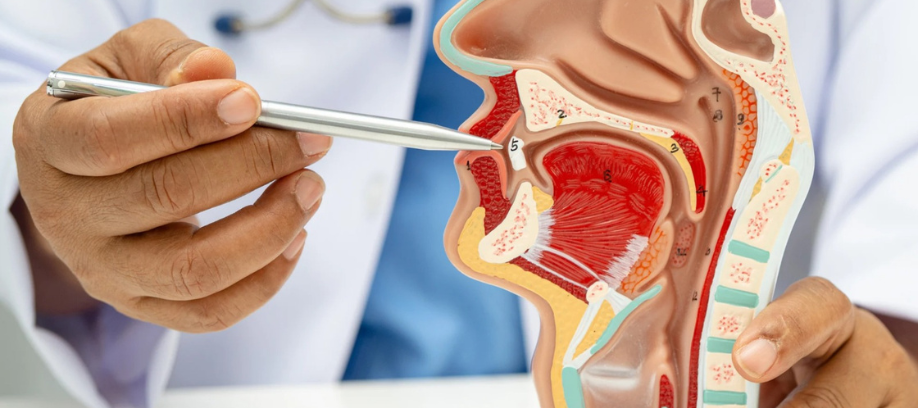
We spend enormous amounts of time improving our businesses — systems, productivity, leadership and performance — while sometimes overlooking the system carrying all of it: our own body.
But have you ever considered that your mouth may know something you haven’t been thinking about?
Your jaw, tongue, gums, breathing patterns and even the way you sleep can provide clues about what is happening beyond your teeth.
Your mouth may be telling you more about your health, sleep and stress than you realise.
The Mouth–Body Connection
For most of our lives, we have been taught to think about oral health in fairly simple terms: brush twice a day, don’t eat too much sugar and visit the dentist regularly. All important advice. But your mouth is much more than your teeth.
For me, a holistic approach to oral health simply means that I don’t look at the mouth in isolation.
The mouth is connected to the rest of the body through biology, inflammation, breathing, nutrition, the nervous system and our daily habits.
This is what I mean when I talk about the Mouth–Body Connection.
What happens in the body can show up in the mouth — and what happens in the mouth doesn’t necessarily stay there.
Your jaw may know you’re stressed before you admit it
As business owners, we can become remarkably good at functioning under pressure.
Deadlines, decisions, responsibilities — we manage them and carry on. We may not even describe ourselves as stressed. But our body doesn’t necessarily share that opinion.
Sometimes the jaw gives us one of the clues.
Perhaps you catch yourself clenching while working. Or you wake with a tired jaw, headaches, sensitive teeth or tension around your face and neck.
Many people who grind or clench at night are given a night guard. Protecting the teeth from excessive wear and damage can be very important.
But I would like to ask another question:
Why are you grinding in the first place?
Bruxism is complex and can have several contributing factors. Stress may be part of the story — but it may not be the whole story.
How are you sleeping? Are you breathing comfortably? Do you regularly wake with a dry mouth?
A night guard may protect your teeth. But sometimes we also need to look beyond the teeth.
Where is your tongue right now?
Before you read any further, stop for a moment.
Don’t change anything yet.
Where is your tongue?
Are your teeth touching?
Are your lips together?
Are you breathing through your nose or your mouth?
Most people have never thought about it.
At rest, the tongue would ideally sit gently against the palate, the lips remain comfortably closed, the teeth are slightly apart, and breathing occurs through the nose when the nasal airway is clear.
The tongue isn’t simply there for tasting and speaking. It plays an important role in swallowing and oral function, and during childhood the function of the tongue and surrounding muscles is among the factors involved in facial and jaw development.
If someone consistently rests with their mouth open or struggles to breathe comfortably through their nose — particularly during sleep — I don’t simply tell them to close their mouth.
I become curious about why.
That curiosity is an important part of prevention.
Your gums aren’t separate from the rest of you
The Mouth–Body Connection goes much further than jaw muscles, tongue posture and breathing.
Consider your gums.
Persistent bleeding or inflammation shouldn’t simply be accepted as “something my gums do.”
Periodontal disease is associated with systemic conditions including diabetes and cardiovascular disease. These relationships are complex and do not mean that gum disease automatically causes these conditions, but they demonstrate why oral health should not be viewed in complete isolation from general health. And the connection works both ways.
Our medications, hormones, health conditions, nutrition, stress and lifestyle can also influence what happens inside the mouth.
The mouth is part of the body — biologically, not just philosophically.
What can you notice yourself?
You don’t need to diagnose yourself. But you can become more observant.
Ask yourself:
Do I regularly wake with a tight or tired jaw?
Do my gums repeatedly bleed?
Do I often wake with a dry mouth?
Can I comfortably breathe through my nose?
Where does my tongue naturally rest?
None of these observations alone gives you a diagnosis.
These questions may give you a reason to become curious.
And if something persists or concerns you, that curiosity should lead you to the appropriate dental, medical or other qualified healthcare professional.
That, to me, is also an important part of prevention: not waiting until something hurts before becoming interested in what your body is telling you.
Understanding your mouth, not simply cleaning your teeth
This way of thinking is also behind a project I am developing called Your Mouth Your Health.
I want adults — and especially the next generation — to understand something many of us were never really taught:
how to understand their mouth, not simply how to clean their teeth.
Because understanding the why can turn health advice into meaningful, preventive action.
So perhaps the next time you wake with a tight jaw, don’t simply shrug and think:
“I’m probably just a little stressed at the moment.”
Become curious.
How did you sleep?
Were you breathing comfortably during the night?
Did you wake with a dry mouth?
Where does your tongue normally rest?
A night guard may be protecting your teeth — and that’s important — but it doesn’t necessarily tell you why your jaw was working all night. Sometimes we need to stop looking at one symptom in isolation and start looking at the person as a whole.
And perhaps, as business owners, one of our greatest advantages isn’t another productivity tool at all. It is learning to notice — and understand — the body that makes everything else possible.
Your mouth might be trying to tell you something.


0 Comments